

Golden Retriever puppies grow fast enough that it is very easy to become slightly obsessed with the scale.
One week they look all legs and ears. The next they seem wider. Then they hit a gangly stage where none of their body parts appear to have been informed what size the rest of the dog is going to be.
So it is completely reasonable to want a Golden Retriever growth chart.
The problem is when a chart turns into a target.
Golden Retrievers do not all grow at exactly the same rate, and a puppy being heavier than another puppy of the same age does not automatically mean they are healthier, better developed or destined to become a larger adult.
Writer Sophie Bennett looks at how Golden Retrievers typically develop from puppyhood to adulthood, with perspective from professional dog trainer and behavior consultant Ali Smith.

Golden Retriever growth chart by age
A growth chart should be treated as a rough guide rather than a prescription.
Your puppy’s sex, genetics, breeding line, nutrition, health and individual development can all affect their weight at a particular age.
A more useful way to think about growth is:
- Birth-8 weeks: Rapid early development; breeder monitors weight and general progress closely.
- 8-12 weeks: Fast growth, small body, limited coordination and very little self-control.
- 3-4 months: Noticeably taller and stronger; often entering an increasingly mouthy, busy stage.
- 4-6 months: Substantial growth; legs may look disproportionately long; adult teeth begin replacing puppy teeth.
- 6-9 months: Adolescent body emerging; still growing and often nowhere near behavioral maturity.
- 9-12 months: May look surprisingly adult from a distance but still developing physically.
- 12-18 months: Growth slows; body begins filling out and maturing.
- 18-24+ months: Many Goldens continue developing muscle, chest and overall adult structure.
There is a huge temptation to attach a precise number to every row.
I would resist that.
The question is not whether your puppy weighs exactly what somebody else’s six-month-old Golden weighed. It is whether your puppy is growing steadily, maintaining an appropriate body condition and developing normally for their individual genetics.
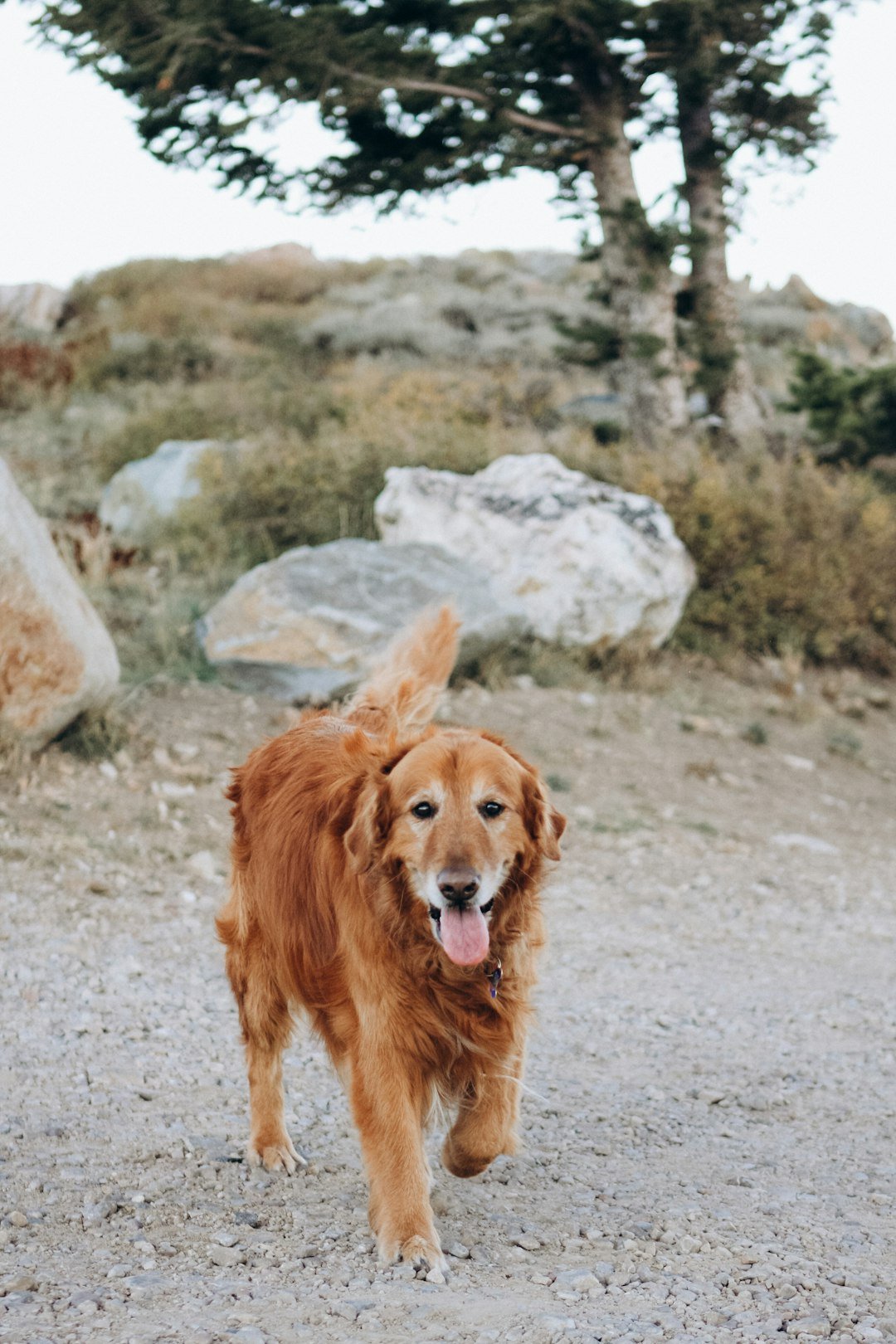
How big is a full-grown Golden Retriever?
Golden Retrievers are medium-to-large dogs.
Breed standards give a useful picture of expected adult height, but there is still natural variation between individuals.
Males are generally taller and heavier than females, and field-bred and show-bred Goldens can also look noticeably different in build.
A field Golden may appear leaner, lighter and more athletic. A show-line Golden may have more bone, coat and overall substance.
Neither should be judged purely by the number on a scale.
Our guide to field vs show Golden Retrievers explains why their builds and activity levels can differ.
How quickly do Golden Retriever puppies grow?
Very quickly at first.
The first six months can feel dramatic because the puppy is changing constantly. They gain height, weight, coordination, muscle and confidence while simultaneously losing their puppy teeth and discovering increasingly inventive ways to get into things.
Growth then becomes less visually dramatic.
A Golden approaching their first birthday may already look like a large adult dog to somebody who does not know the breed, but their body can continue developing well beyond that point.
When do Golden Retrievers reach their adult height?
Many Goldens are close to their adult height by around their first year, but that does not mean they are physically finished.
Height tends to settle before the rest of the body.
The chest can broaden. Muscle develops. The body becomes less adolescent-looking. Coat and feathering may continue changing.
When do Golden Retrievers stop gaining weight?
There is no useful age at which a Golden Retriever should simply stop gaining weight forever.
A growing adolescent may legitimately gain weight as their frame matures and they add muscle.
The more important distinction is between healthy development and excess body fat.
Our guide to how much a Golden Retriever should weigh explains why body condition is more useful than chasing one ideal number.
Male vs female Golden Retriever growth
Male Goldens tend to mature into larger dogs than females, but sex is only one factor.
You can have a substantial female and a relatively light-framed male.
The parents often give you much more useful information than a generic male-vs-female chart.
Our male vs female Golden Retriever guide looks at that decision in more detail.
Why does my Golden Retriever puppy look skinny?
Because growing puppies can be spectacularly awkward.
They can shoot upward before they fill out. Their legs can seem too long. Their waist may become more obvious during a growth spurt.
A lean adolescent is not automatically underfed.
In fact, keeping a growing large-breed puppy too heavy can create its own problems.
What you want is an appropriate body condition, not the roundest puppy in the room.
Why is my Golden Retriever puppy bigger than the chart?
Possibly because the chart is not your dog’s genetics.
It could also be because your puppy is carrying more body fat than ideal.
Those are two very different things.
Look at the parents. Consider the breeding line. Assess body condition.
Why is my Golden Retriever puppy smaller than expected?
Some Goldens are smaller-framed.
Field-line dogs in particular can look considerably lighter than the heavy, heavily coated Goldens many people picture.
Growth rate can also vary.
What matters is the pattern.
A puppy who has always tracked on the smaller side but is developing consistently is very different from a puppy whose growth suddenly stalls.
Should you feed more to make a Golden Retriever puppy grow bigger?
No.
A puppy’s genetically determined adult size is not something you should try to maximize through extra food.
More calories do not create a better-developed Golden. They can create an overweight one.
Growth and exercise
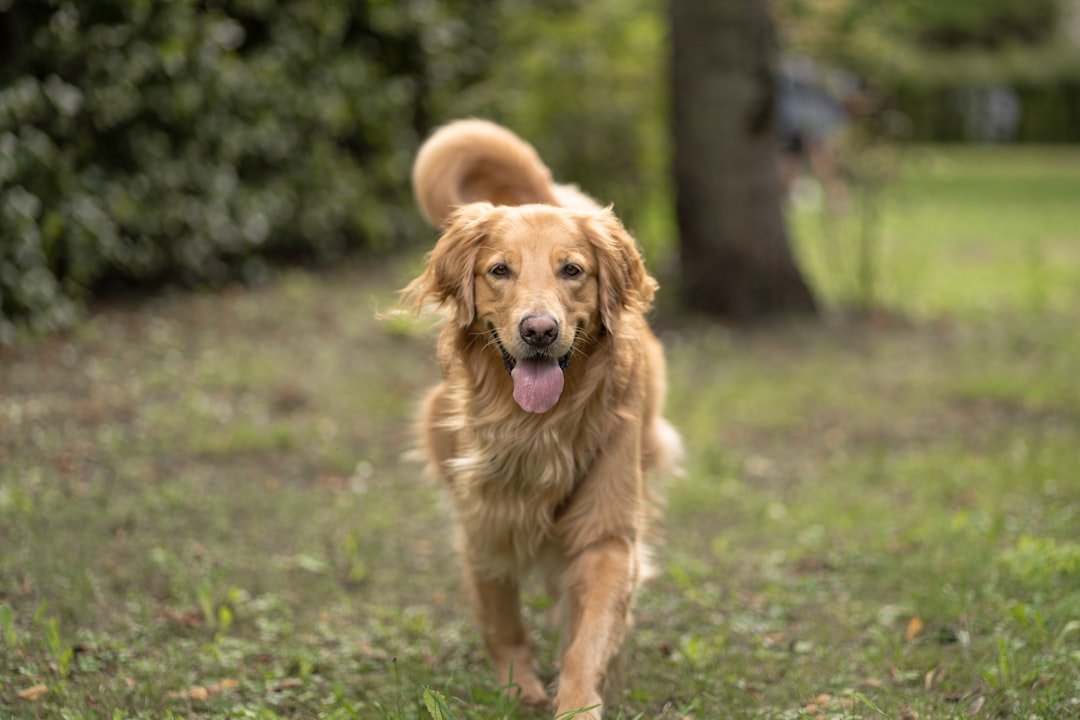
Growing puppies need movement.
They need to explore, play, build coordination, use their muscles and learn how their bodies work.
What they do not need is an adult endurance program.
Our Golden Retriever exercise guide looks at how to meet their physical needs without turning exercise into a mission to tire them into submission.
Growth and behavior are not the same thing
A twelve-month-old Golden can be almost adult-sized while still behaving like a very large adolescent.
Physical growth happens much faster than behavioral maturity.
Your dog may have the strength of an adult and the impulse control of somebody who has just discovered there is a sandwich on the kitchen counter.
Training therefore matters long after the puppy stops looking small.
Our Golden Retriever puppy training guide gives you the foundations to build from.
Related Golden Retriever guides: Next, read when Golden Retrievers stop growing, how much a Golden Retriever should weigh, and our Golden Retriever feeding chart by age.
Useful external reading: Physical growth is only one part of puppy development. Ali’s free Ultimate Socialization eBook breaks puppy socialization into practical developmental stages, and Rebarkable’s four essential cues guide is a useful way to keep training priorities realistic while your Golden grows.
The bottom line
Golden Retriever growth charts are useful for showing the general pattern of development.
They are not useful as scorecards.
Some Goldens grow faster. Some mature later. Males are generally larger than females. Field and show lines can look different. Individuals within the same litter can mature differently.
Pay attention to steady development and body condition rather than trying to make your puppy match a number on a screen.