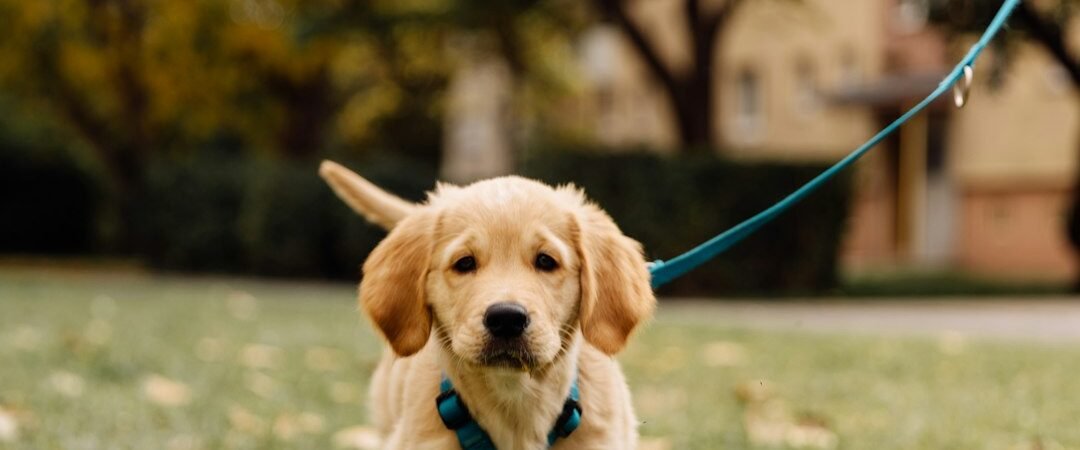
Golden Retriever puppies grow at a slightly ridiculous speed, and a collar that fits beautifully one week may be uncomfortably snug a fortnight later. That is why buying a collar by age alone is unreliable: two puppies of the same age can have quite different neck measurements, and sizing varies between manufacturers.
Measure the puppy in front of you, choose an adjustable collar that fits comfortably today, and plan to check it frequently as they grow. This guide explains what to measure, what to look for in the hardware and when it is time to size up.
Writer Sophie Bennett looks at how to choose and fit a collar for a Golden Retriever puppy, with perspective from professional dog trainer and behavior consultant Ali Smith.
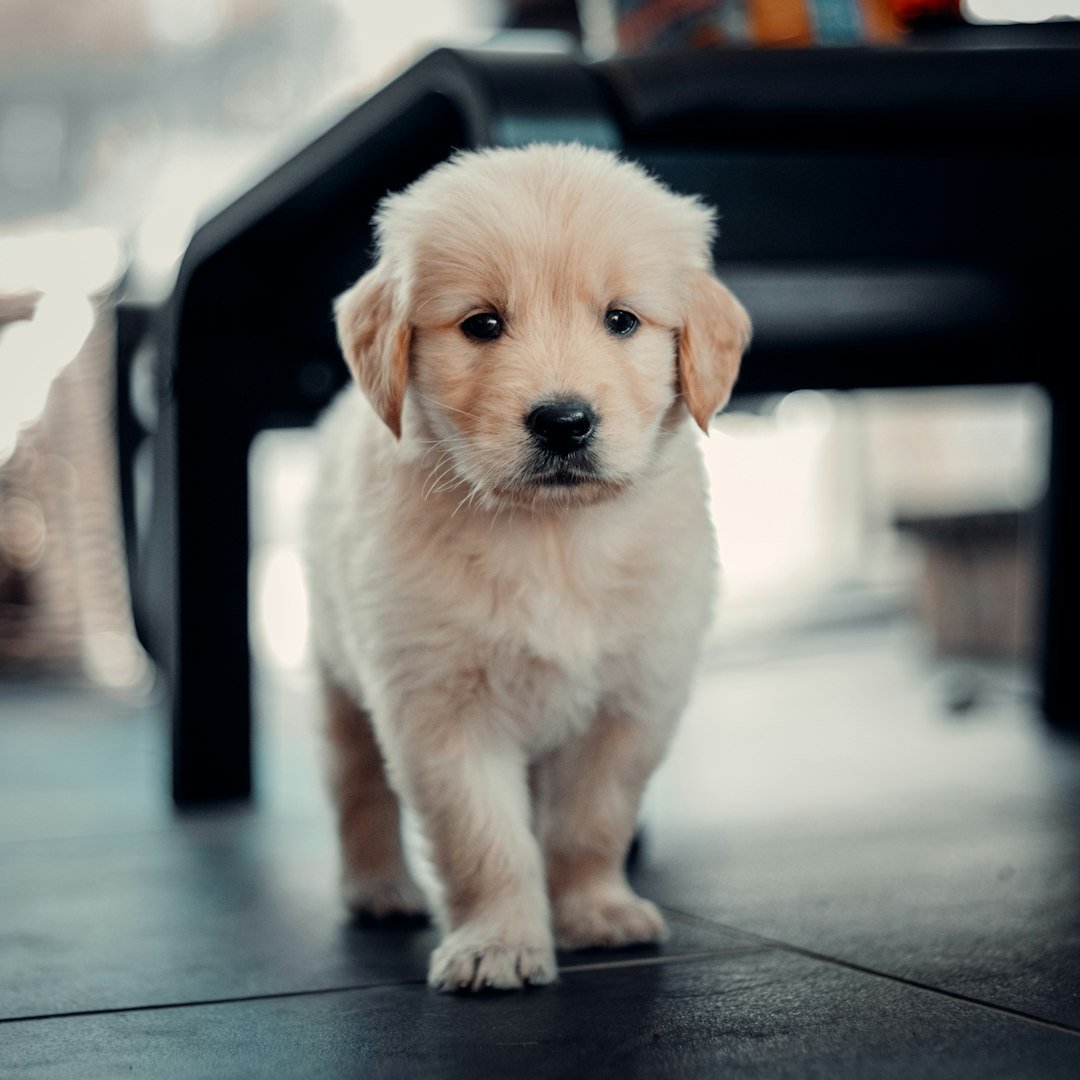
What size collar does an 8-week-old Golden Retriever need?
Many eight-week-old Golden puppies will fit into a small or small-to-medium adjustable collar, but sizing varies by manufacturer and puppy.
The label is much less useful than the neck measurement.
Measure where the collar will naturally sit, then choose a collar whose adjustment range comfortably includes that measurement with room for growth.
How do you measure a Golden Retriever puppy for a collar?
Use a soft measuring tape around the neck where the collar will sit.
Do not pull it tight.
You want a realistic neck circumference, not the smallest number you can physically achieve.
If your puppy is wiggly, use a piece of string and measure the string afterwards.
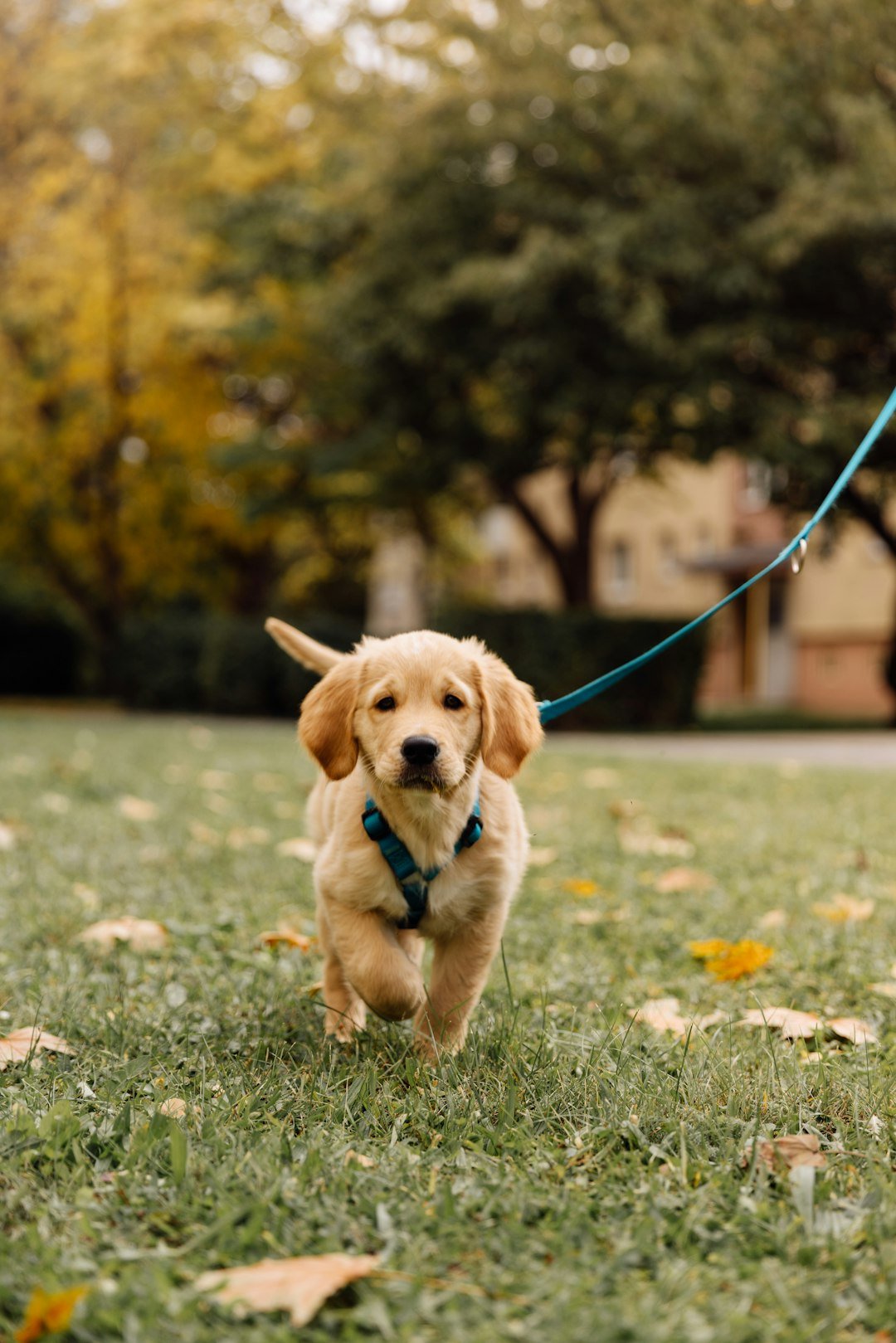
How tight should a puppy collar be?
A common rule is that you should be able to slide two fingers comfortably between the collar and the puppy’s neck.
But use judgment rather than treating “two fingers” as a mathematical law.
The collar should be secure enough that the puppy cannot easily back out of it, while loose enough that it does not restrict movement or press into the neck.
How often should you check collar fit?
Very often.
Golden puppies can grow noticeably over a short period.
I would check fit at least weekly during rapid growth, and more often if the puppy is clearly in a growth spurt.
Do not assume the collar is still fine because it fit when you bought it.
Should I buy a collar with lots of growing room?
Some adjustment range is useful.
But buying a huge collar and tightening it down excessively can leave bulky doubled webbing, oversized hardware and a poor fit on a small puppy.
Buy for the dog in front of you, then expect to replace it.
Puppy equipment is allowed to be temporary.
Flat collar or something else?
For everyday ID, a simple flat collar is usually the most practical choice.
For walking, I generally prefer a well-fitted harness rather than attaching routine leash pressure to the neck.
Our Golden Retriever harness guide covers breed-specific fit. For a wider comparison of everyday equipment, see Ali’s hands-on dog harness recommendations; if your puppy is already backing out of their gear, her escape-proof harness guide explains which designs provide more security.
Should a Golden Retriever puppy wear a collar all day?
That depends on the environment.
A collar is useful for identification, but collars can also snag on crates, fencing, furniture or another dog’s jaw during rough play.
Think about context rather than assuming the collar has to stay on 24/7.
If your puppy is crated unsupervised, many owners choose to remove collars to reduce snagging risk.
What material is best?
You do not need anything exotic.
Look for something lightweight, adjustable, comfortable and easy to clean.
Heavy hardware can be unnecessary on a small puppy.
As the dog grows, durability becomes more important because an adolescent Golden can put considerably more force through equipment than an eight-week-old puppy.
Should the collar have an ID tag?
Yes, where practical.
An ID tag gives somebody an immediate way to contact you if your puppy gets loose.
Microchipping is still important because tags can fall off and collars can be removed.
What if my puppy scratches at the collar?
A little initial awareness can be normal.
A puppy who has never worn a collar may scratch at it briefly.
But persistent scratching deserves a fit check.
Look for rubbing, redness, trapped hair, rough seams or hardware pressing into the neck.
How do I teach a puppy to wear a collar?
Keep it boring.
Put it on for short periods while the puppy is eating, playing or doing something else pleasant.
Avoid repeatedly fiddling with it or turning the collar into a wrestling event.
Most puppies habituate quickly when the fit is comfortable.
Golden Retriever puppy collar sizing: a practical checklist
Before buying, take a few minutes to check the measurements and hardware rather than choosing a size from a breed chart. Goldens vary, even within the same litter, and adjustable collar ranges vary enormously between brands.
- Measure the neck. Use a flexible tape where the collar will sit, with the puppy standing naturally. Record the measurement in inches or centimetres.
- Check the manufacturer’s actual size range. Your puppy’s measurement should sit comfortably inside it, not right at the smallest or largest setting.
- Check buckle weight and webbing width. A collar can fit numerically while still being awkwardly bulky on a young puppy.
- Test the fit while moving. Watch your puppy walk, turn and lower their head. The collar should not ride into the throat, rub or slip over the head.
- Recheck frequently. Keep the measurement somewhere you’ll find it again and compare it with the current collar’s adjustment range each week.
Collar-fit troubleshooting
| What you notice | What to check |
|---|---|
| Collar slips over the head | Recheck adjustment, head-to-neck proportions and whether that design is secure enough for this puppy. |
| Red marks or rubbed fur | Check tightness, seams, buckle position and whether dirt or moisture is trapped underneath. |
| Bulky folded webbing | Try a collar with a smaller size range and lighter hardware rather than overtightening a larger size. |
| Puppy constantly scratches at it | Inspect fit and skin first; then introduce comfortable, brief wearing sessions with rewards. |
| Collar suddenly seems snug | Measure again immediately. Growing Goldens can outgrow equipment faster than you expect. |
How to introduce a new collar without a battle
Let your puppy investigate the collar on the floor and reward calm curiosity. Briefly touch it to their neck, reward, then fasten it for a few seconds while they enjoy something pleasant. Build duration gradually. Avoid holding a struggling puppy still to force it on: that can make the collar predict an unpleasant handling experience.
Keep early sessions supervised, and take the collar off before unsupervised crating or rough play where snagging is a risk. If the puppy freezes, panics or persistently tries to escape the collar, make the next step easier rather than pushing through.
A comfortable collar is useful for identification, but it isn’t the only piece of walking equipment. Pair your choice with a suitably fitted harness when teaching loose-leash skills, especially for a puppy likely to lunge enthusiastically toward people and other dogs.
When should I size up?
Before the current collar reaches the very end of its adjustment.
If you are checking fit regularly, you should see the change coming.
Replace it once the collar no longer gives you comfortable adjustment room or the hardware feels too small for the dog’s strength.
Related puppy-equipment guides: See our best harnesses for Golden Retrievers, Golden Retriever crate-size guide, and complete Golden Retriever puppy shopping checklist.
Useful external reading: For turning puppy equipment into useful training rather than just something they wear, Ali’s recall guide explains safe long-line and harness use, while Rebarkable’s four essential cues guide includes loose-leash walking as a core life skill.
The bottom line
There is no single collar size that fits every Golden Retriever puppy at eight weeks, twelve weeks or six months.
Measure the puppy, choose a collar with a sensible adjustment range, and recheck the fit frequently.
Golden puppies grow too quickly for “I bought the right size once” to be a useful strategy.