

Golden Retrievers will happily tell you they eat everything.
That is not the same thing as everything being a good idea.
For most Goldens, the foundation should be a complete and balanced dog food appropriate for their life stage, with the total amount adjusted to the individual dog’s body condition, activity and growth.
That sounds less exciting than debating chicken versus salmon versus some exotic ingredient list, but it is a much more useful place to start.
Writer Sophie Bennett looks at what Golden Retrievers actually need from their diet, with perspective from professional dog trainer and behavior consultant Ali Smith.
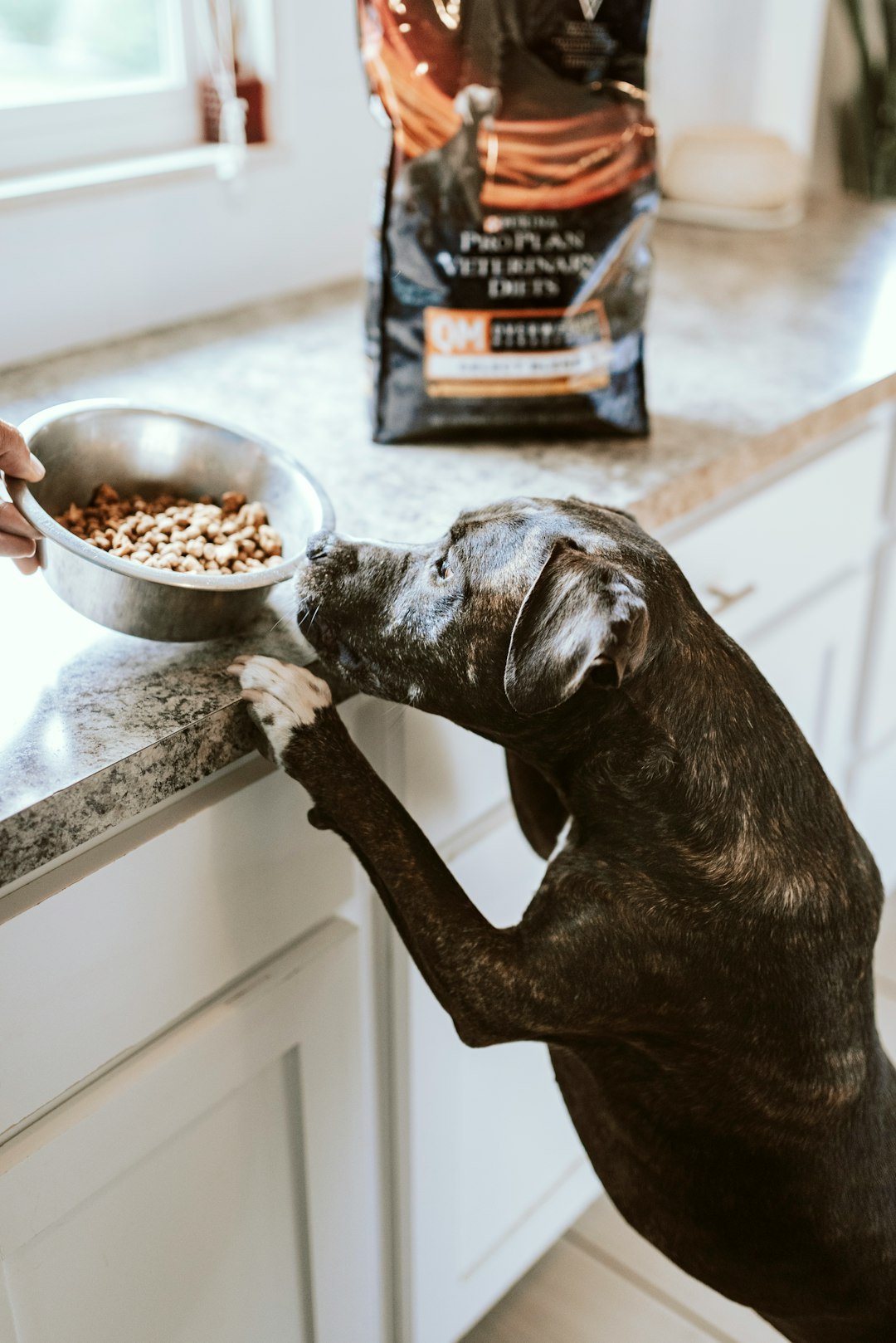
What should a Golden Retriever eat every day?
For most healthy pet Goldens, a complete commercial diet formulated for dogs is the simplest reliable option.
The important bit on the label is the nutritional adequacy statement. AAFCO explains that complete and balanced foods should be appropriate to the dog’s species and life stage.
Puppies need food suitable for growth. Adults need food appropriate for maintenance unless there is a specific reason to use something else.
Do Golden Retrievers need a breed-specific food?
No.
A Golden Retriever does not require a bag with a Golden Retriever photograph on it.
A breed-specific formula may be perfectly good, but the name on the front matters less than whether the food is nutritionally appropriate and whether the manufacturer can explain how it is formulated and quality controlled.

What should Golden Retriever puppies eat?
Golden puppies need a complete and balanced growth diet appropriate for a dog expected to mature into a medium-to-large adult.
Growth is not a race.
Overfeeding a Golden puppy in an attempt to make them grow larger or faster is not useful. Our guide to how much to feed a Golden Retriever puppy explains how body condition and growth should guide portions.

What should adult Golden Retrievers eat?
Healthy adults generally need a complete maintenance diet that provides enough energy to maintain lean body condition without consistently overshooting their needs.
A highly active working Golden and a relatively sedentary family dog may need very different calorie intakes even when they weigh the same.
That is why feeding charts are starting points rather than commandments.
Dry, wet, fresh or raw?
The format alone does not tell you whether a diet is good.
Dry food can be complete and balanced. Wet food can be complete and balanced. Some commercial fresh foods can be complete and balanced.
Raw feeding brings additional nutritional and food-safety considerations and is not automatically healthier because the ingredients look less processed.
The question should be whether the finished diet reliably meets the dog’s nutritional needs, not whether the ingredient list looks appealing to a human.
Can Golden Retrievers eat human food?
Some human foods can be used safely as occasional extras, but table food should not quietly become a large proportion of the diet.
Many foods people eat are too calorie-dense, nutritionally unbalanced for dogs or actively toxic.
If you are feeding extras regularly, count them as part of the dog’s total intake.
How much should treats make up?
Treats are useful, particularly with a food-motivated breed.
But training calories count.
If you are doing several training sessions every day, use some of the dog’s normal ration where practical rather than pretending those calories vanish because they were earned.
Do Golden Retrievers need supplements?
Usually not if they are healthy and eating a complete and balanced diet.
AAFCO notes that unnecessary supplementation can push some nutrients above safe levels.
Supplements make sense when there is an actual reason, not because the dog-food aisle has made you feel guilty.
What if my Golden is always hungry?
Food enthusiasm is not a body-condition score.
Many Goldens are extremely convincing around food.
Use body condition, weight trend and veterinary guidance rather than appetite theatrics alone.
Our Golden Retriever weight guide explains what to look at beyond the number on the scale.
What if my Golden is fussy?
First rule out illness if the change is sudden or accompanied by other symptoms.
If the dog is otherwise well, be careful about turning every hesitation into an increasingly elaborate menu.
Constantly replacing food, adding richer toppers and negotiating every meal can create a pattern that becomes difficult to unwind.
Related feeding guides: For puppies, see our best puppy food guide and how much to feed a Golden Retriever puppy. For adult condition, use our Golden Retriever weight guide.
Useful external reading: AAFCO’s pet-food guidance is useful for checking whether a diet is complete and balanced, while AAFCO’s supplement guidance explains why adding extras is not automatically better. For food-based training, see Rebarkable’s four essential cues.
Build a feeding routine that works in real life
Choose a complete diet suitable for your Golden’s life stage, measure the total daily portion and decide how you will divide it between meals and training. For puppies, frequent smaller meals can be helpful, while many adults do well with two measured meals a day. The right quantities depend on the food’s calorie density, your dog’s body condition and veterinary advice rather than breed alone.
Review portions as activity and weight change, and include training treats in the day’s food budget. If you are using kibble for training, set some aside before breakfast so it is not added on top of the full ration. For further ideas, Rebarkable’s essential puppy training cues suggests useful ways to put that food to work.
The bottom line
Golden Retrievers do not need a magical Golden Retriever diet.
They need complete nutrition appropriate to their life stage, enough calories to support healthy body condition, and a feeding routine that takes treats and training food into account.
Start with those fundamentals. The front-of-bag marketing can come later.