
“How much should I feed my Golden Retriever puppy?” sounds like it should have a beautifully simple answer.
Three cups. Two and a half. Four if they are growing fast.
Unfortunately, that kind of answer is usually too crude to be useful.
The same number of cups can represent very different calories depending on the food, and two Golden puppies of the same age can have meaningfully different energy needs.
The better question is: how much does this puppy need to grow steadily while staying in an appropriate body condition?
Writer Sophie Bennett looks at how to work that out, with perspective from professional dog trainer and behavior consultant Ali Smith.
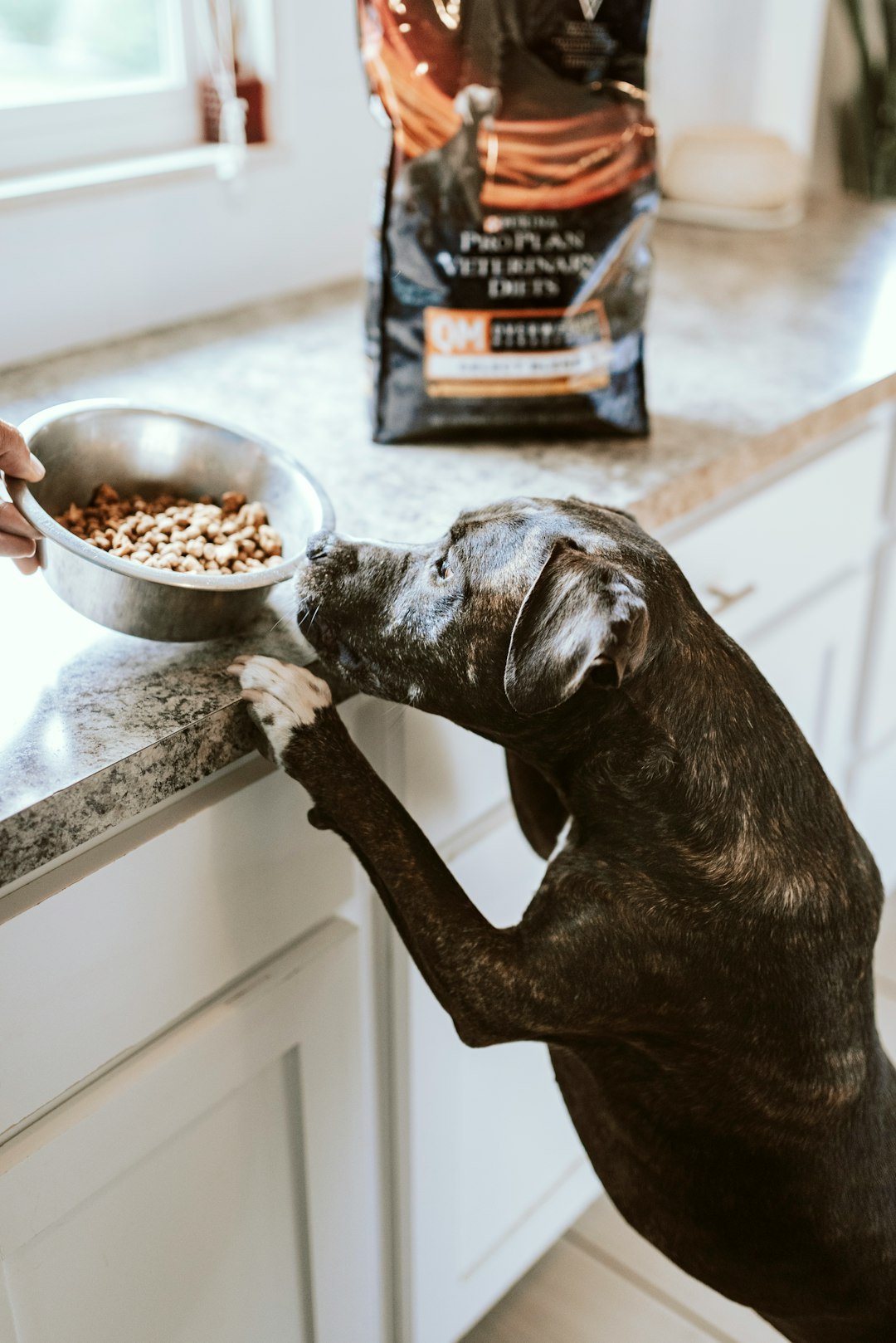
There is no universal cups-per-day number
Start with the feeding guide on your puppy’s specific food.
Then treat it as a starting estimate.
Manufacturers cannot see your puppy’s body condition, activity, metabolism, training-food intake or growth pattern.
You can.
What determines how much a Golden puppy needs?
- age;
- current body weight;
- expected adult size;
- activity;
- growth rate;
- body condition;
- calorie density of the diet;
- how many calories are also being used for training and treats.
That is why copying another owner’s portion can go wrong even when their dog is the same breed and age.
Why overfeeding a Golden puppy matters
With growing larger-breed puppies, faster is not better.
Veterinary nutrition guidance emphasizes controlled growth because excess energy intake can push puppies to grow too quickly and increase orthopedic risk. VCA’s large-breed nutrition guidance specifically recommends adjusting intake to maintain healthy body condition rather than feeding for maximum growth.
Our Golden Retriever growth chart makes the same point: the goal is steady development, not winning the puppy weigh-in.

How do I know if I am feeding too much?
Look at body condition.
You should be able to feel the ribs without digging through a thick layer of fat, and there should be a visible waist when viewed from above.
A puppy should not look round simply because people think puppies are supposed to be chunky.
Our Golden Retriever weight guide explains this in more detail.
How do I know if I am feeding too little?
A puppy who is persistently losing condition, failing to grow as expected, unusually lethargic or showing digestive problems needs more than an internet portion adjustment.
Speak to your veterinarian.
If the puppy is healthy but simply looks lean during a growth spurt, that may be normal. Growing Goldens can look spectacularly gangly.
How many meals should I feed?
Young puppies usually do better with several smaller meals.
- 8-12 weeks: commonly 3-4 meals.
- 3-6 months: often 3 meals.
- Older puppy: often 2-3 meals.
- Adult: commonly 2 meals.
Our Golden Retriever feeding chart by age covers the broader schedule.
Should I weigh food or use a cup?
If you want accuracy, weigh it.
A digital kitchen scale removes a surprising amount of inconsistency.
Scoops get heaped differently. Cups vary. People eyeball.
Grams are grams.

What about food used for training?
Count it.
Golden puppies are often highly food motivated, which is fantastic for training.
But if breakfast is 100 grams, dinner is 100 grams and another 80 grams quietly disappears during recall practice, the dog did not eat 200 grams that day.
They ate 280.
Use part of the normal ration for training when practical.
My Golden acts starving all the time
Welcome to living with a food-motivated retriever.
Behavior around food is not a reliable calorie calculator.
A dog can be enthusiastic about food and still be receiving more than enough.
Before increasing portions, assess body condition and total daily intake.
Should I add toppers because my puppy will not eat?
Be careful about accidentally training yourself into an escalating catering service.
If a puppy suddenly refuses food, seems ill or has gastrointestinal symptoms, call your veterinarian.
If the puppy is otherwise well, constantly changing toppings and replacing food whenever they hesitate can make feeding increasingly complicated.
Also remember that extras add calories and can unbalance a carefully formulated growth diet if they become a substantial part of intake.
What food should I use?
Choose a complete and balanced diet appropriate for growth and for the expected adult size of the dog.
The AAFCO pet-food guidance explains nutritional adequacy statements, while WSAVA’s nutrition toolkit has practical questions owners can use when evaluating manufacturers.
Our separate guide to the best food for Golden Retriever puppies focuses on choosing the food itself.
Should I add supplements?
Not casually.
If your puppy is eating a complete and balanced growth diet, adding vitamins or minerals can disrupt the balance you paid the manufacturer to formulate.
This is particularly important with calcium in growing larger-breed puppies.
Use supplements only where there is an actual reason and professional guidance.
How often should I adjust the amount?
Regularly.
A puppy’s needs change as they grow.
Check body condition every week or two rather than feeding the same quantity for months because it once worked.
The adjustment does not need to be dramatic. Small changes are usually easier to assess.
Related feeding guides: See our Golden Retriever feeding chart by age, best food for a Golden Retriever puppy guide, and Golden Retriever growth chart for the wider development picture.
Useful external reading: For the nutritional side, AAFCO and WSAVA are stronger references than generic feeding charts. If you are reserving part of your puppy’s ration for training, Ali’s recall guide gives you a genuinely useful place to spend some of it.
How to adjust your puppy’s food without guessing
Start by weighing out the manufacturer’s suggested daily ration for your particular food, then divide that amount between meals and any food you plan to use in training. Record your puppy’s weight at consistent intervals and pay attention to body condition, energy, stools and growth rather than adjusting food after every hungry look. If the trend suggests they are becoming too heavy or too lean, discuss sensible portion changes with your veterinarian.
It helps to measure in grams rather than cups because scoops vary and kibble shapes pack differently. Check the calories per unit of food whenever you change brands, as an identical-looking bowl can deliver a different amount of energy. For a more personalised starting estimate, use Rebarkable’s puppy feeding calculator, then adapt the result to your puppy’s body condition and your veterinary team’s advice.
The bottom line
There is no one correct number of cups for every Golden Retriever puppy.
Start with the feeding instructions for an appropriate growth diet, measure accurately, count training food and watch your puppy’s body condition and growth trend.
Then adjust.
You are feeding a developing individual, not trying to make a dog match a generic portion chart.