
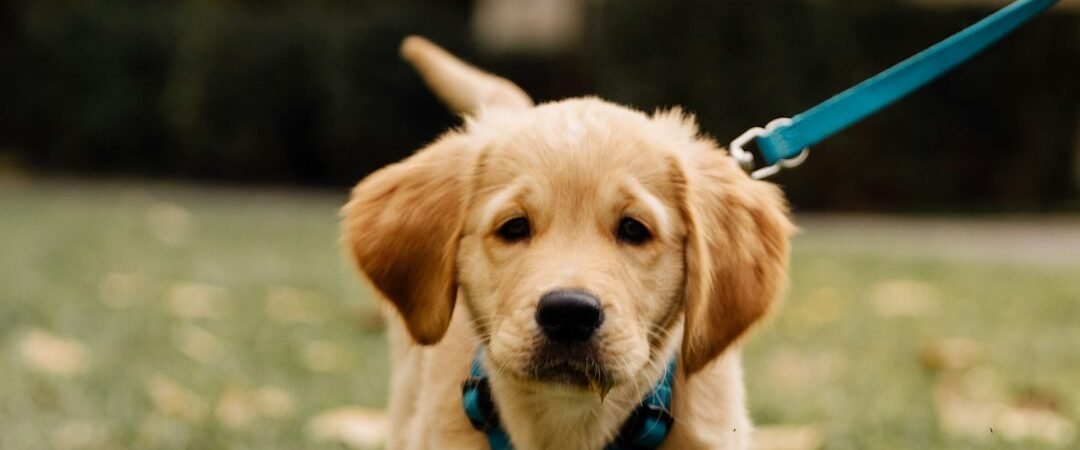
Golden Retriever puppies don’t usually need much convincing that other people and dogs are exciting.
In fact, that can be part of the problem.
When we talk about puppy socialisation, the advice often boils down to “let your puppy meet lots of people and dogs while they’re young.” With a breed as naturally sociable and enthusiastic as the Golden Retriever, though, encouraging more and more greetings can accidentally teach exactly the habit you’ll later struggle with: I see someone, therefore I need to go and say hello.
Dog trainer and behaviour consultant Ali Smith thinks Golden Retriever socialisation often needs to focus just as much on neutrality.
“It’s the over-excitement to see everyone and not knowing when to switch off. There can be a real lack of personal space.”
The goal isn’t to make your friendly puppy less friendly. It’s to help them learn that they can notice people, dogs and everything else happening around them without needing to participate in all of it. That’s one part of the wider process covered in our complete Golden Retriever puppy training guide.
What does socialising a Golden Retriever puppy actually mean?
Socialisation is much broader than meeting people and dogs. It’s the process of helping your puppy learn about the world they’ll live in and develop the skills to navigate it comfortably.
That might include people, dogs, traffic, household noises, different environments and surfaces, grooming, veterinary handling, travelling and simply being somewhere while life happens around them.
The important distinction is that exposure doesn’t have to mean interaction.
Your puppy can see another dog without meeting them. They can watch children playing without being touched. They can hear traffic without walking down the busiest road you can find. They can sit somewhere new, take it all in and leave again.
For Goldens, Smith generally favours observing over greeting.
Repeatedly allowing a puppy to greet every person or dog they notice can create a very predictable expectation:
I see someone → I get to meet them.
That’s fairly manageable when you’ve got a small puppy on the end of the lead. It’s rather less convenient when you’ve got a strong adolescent Golden who can’t understand why today’s Labrador, jogger or unsuspecting stranger isn’t available for a meet-and-greet.
A much more useful lesson is that seeing something doesn’t necessarily mean anything happens.
INFOGRAPHIC: SOCIALISATION ≠ INTERACTION
SEE → OBSERVE → READ YOUR PUPPY
Relaxed? → calm, low-key reward → move on
Not relaxed? → create space / leave → try an easier version another time
Don’t panic about the socialisation window
There is an important developmental socialisation period in puppyhood, and good early experiences matter.
But this is where puppy advice can become slightly ridiculous.
Huge socialisation checklists can leave guardians feeling as though they have a tiny window in which they must introduce their puppy to 100 people, ten surfaces, umbrellas, wheelchairs, livestock, sirens, trains, men in hats and anything else somebody managed to fit onto a printable PDF.
Smith is not a fan of that approach.
“It’s a little absurd. It doesn’t need to be that much. Dogs are always learning, and it can do as much harm as good to force exposure — especially when the guardian is uncertain what good exposure looks like.”
That’s an important distinction.
Puppies do have a particularly sensitive period for social learning, but learning doesn’t suddenly stop when that period ends. The American Veterinary Society of Animal Behavior’s puppy socialisation guidance supports continuing social experiences beyond the early puppy period, with exposure kept appropriate to the individual puppy rather than overwhelming them.
Simply exposing a puppy to something doesn’t make that exposure beneficial.
If your puppy is terrified, overwhelmed or unable to cope, staying there because “they need socialising” can teach a very different lesson from the one you intended.
So what does good exposure actually look like?
Smith’s starting point is refreshingly simple: look at the puppy.
Rather than measuring success by whether your puppy managed to get close to something, pay attention to what their body is telling you.
You’re looking for relaxed body language. Can your puppy observe what’s happening without becoming increasingly tense, frantic or fixated? Can they comfortably look around? Can they disengage?
If so, reward it.
Smith deliberately keeps that reward fairly low-key. Calm praise or a quietly delivered training treat make far more sense than turning a beautifully uneventful moment into a party.
After all, uneventful is rather the point.
If your puppy isn’t coping, don’t stand there attempting to persuade them to be brave. Create distance. And if necessary, leave.
“Ask for space or walk away.”
Sometimes you can also show your puppy that the unfamiliar thing isn’t a concern. Smith describes this as a little “monkey see, monkey do”: calmly investigate or interact with something yourself and allow your puppy to watch and gather information.
But if it’s genuinely too much, there’s no requirement to conquer it today. Try again another time.
Socialisation isn’t a checklist
What your puppy needs to experience depends heavily on the life they’re actually going to live.
A Golden growing up in a city might benefit from gradually experiencing buses, traffic, crowds, lifts and busy pavements. A rural puppy might need experience around livestock, machinery, uneven terrain or completely different noises and environments.
You don’t need to manufacture every conceivable experience just because it appeared on somebody else’s checklist.
As Smith puts it, there’s “no point in planes if the pup is unlikely to ever see one.”
Prepare your puppy for their world.
- different kinds of people they’re realistically likely to encounter
- suitable dogs
- traffic and transport
- household and environmental noises
- surfaces and terrain
- grooming and routine handling
- veterinary environments
- places you’ll actually visit together
If you’re unsure where to begin, Smith’s Puppy Socialisation Guide provides a structured way of working through puppy experiences without turning the process into a frantic race to tick boxes.
Your Golden puppy doesn’t need to greet everybody
This is where socialising a Golden can become harder than it sounds.
People want to touch them.
Golden puppies have both an appearance and a breed reputation that make strangers particularly inclined to approach, and “they’re friendly” can quickly become justification for a lot of unsolicited interaction.
But friendliness isn’t consent.
Smith considers consent an important part of raising puppies, and not just between dogs.
“We need to read their actions and their body language, particularly when we pet them or approach them.”
One simple way to do that during petting is a consent test.
Offer a few strokes and then stop. If your puppy actively comes back towards you or your hand, you have useful information: they’d probably like the interaction to continue. If they turn away or move away, respect it. If you’re unsure, do less. You can always pause and offer another opportunity.
And don’t make the mistake of thinking a dog has consented unless they growl or snap.
Dogs communicate far more subtly than that. Turning the head away, looking away, moving away, lip or nose licking, yawning, changes in posture, tension or suddenly becoming still can all be relevant signals depending on the situation.
These aren’t boxes on a rigid “ladder” that every dog climbs in order. Context matters and dogs can skip signals entirely.
The useful lesson for guardians is much simpler: start listening while your dog is still communicating quietly.
Goldens can be victims of their friendly reputation
Golden Retrievers’ reputation for tolerance can make this particularly important.
Goldens do appear in published dog-bite datasets, including pediatric bite studies, despite the breed’s overwhelmingly friendly public image. Those raw numbers can’t tell us that a Golden is more likely to bite than another breed because researchers frequently don’t have reliable data showing how many dogs of each breed exist in the underlying population.
The interesting question, Smith argues, is what our expectations of the breed do to the way we interact with them.
If people assume that a Golden Retriever must want to be stroked, cuddled, approached and handled because “Goldens love everyone,” their quieter requests for space can be overlooked.
The dog turns away. Someone follows. The dog moves. They’re approached again.
Eventually, if those subtle signals repeatedly don’t work, the dog may communicate more forcefully — at which point humans can be remarkably quick to describe a growl, snap or bite as having happened “out of nowhere.”
A Golden Retriever doesn’t lose the right to personal space because we expect the breed to be friendly.
Friendly isn’t the same as socially skilled
There’s another side to this.
Your Golden may absolutely adore other dogs while simultaneously being rather rude to them.
A puppy enthusiastically charging straight into another dog’s face isn’t necessarily displaying great social skills. They’re displaying enthusiasm.
Not every dog will appreciate it.
Social competence involves being able to respond to the other dog’s communication too, including when that dog would prefer some space.
Where possible, Smith encourages Golden puppies to approach other dogs on a curve rather than barrelling straight towards them.
Her technique is extremely complicated:
“I walk in an arc, so they walk in an arc.”
Rather than pulling the puppy sideways with the leash, the guardian creates the curved approach with their own movement and the puppy follows. A well-fitted harness can also make this kind of everyday training more comfortable, while a long line is useful when you want to give a puppy more freedom to observe and move without giving them full off-leash access.
Of course, human environments don’t always make good canine etiquette particularly easy. Narrow pavements, paths and doorways can funnel dogs directly towards one another.
Do what the environment allows. And remember that passing the other dog without greeting them remains a perfectly good option.
Consent needs to work in both directions
There’s a wider issue here that goes beyond encounters with strangers.
Goldens can be very persistent about seeking attention and physical affection from their own people. Guardians then understandably respond with plenty of affection of their own.
But Smith thinks this can sometimes become a two-way cycle that leaves surprisingly little room for autonomy.
If a puppy is constantly asking for attention and their guardian is constantly initiating touching, cuddling and interaction in return, when does the dog practise simply existing independently?
Socialisation should include learning that proximity doesn’t automatically mean physical interaction.
Your puppy can lie near you without being stroked. They can choose to move away. They can decide they’ve had enough affection.
And if we’re teaching a Golden Retriever to notice and respect another dog’s request for space, it seems only reasonable that humans should respect theirs too. That ability to be comfortable without constant interaction also feeds naturally into teaching a Golden Retriever puppy to be home alone.
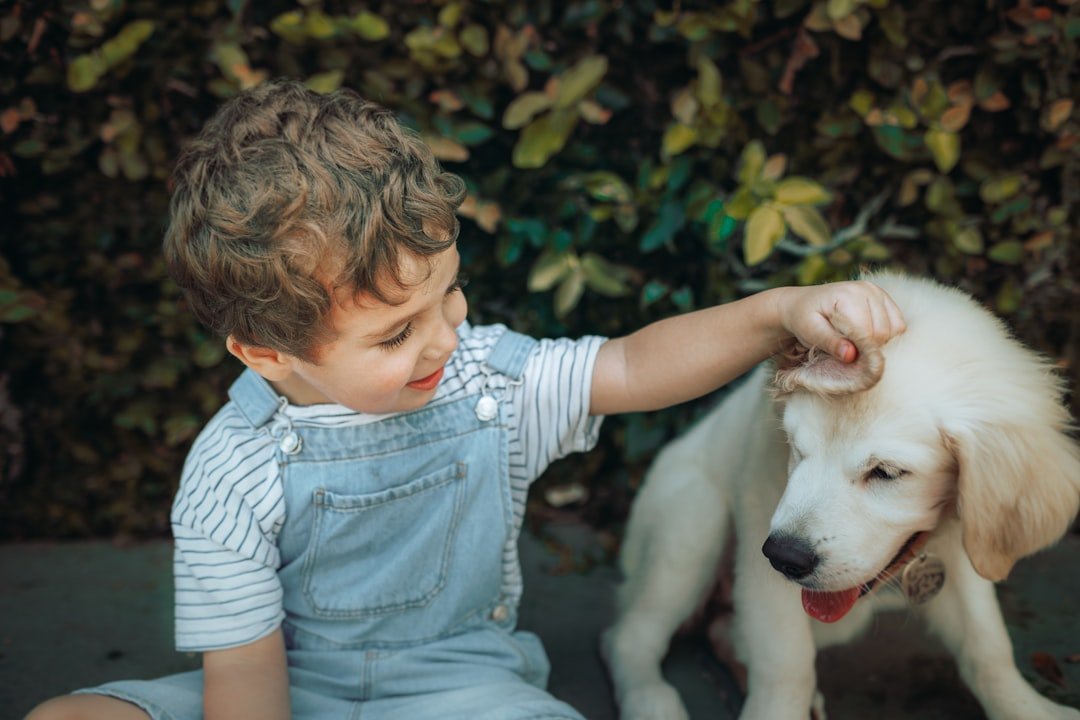
Socialising Golden Retriever puppies with children
Children are another situation where the Golden’s friendly reputation can work against them.
Smith’s rule is straightforward:
“No touch without permission. And I’d basically let your dog tell you.”
There are really two permissions involved.
A child should ask the guardian before touching the puppy. Then the guardian needs to pay attention to whether the puppy wants that interaction.
Approaching someone isn’t necessarily consent to prolonged touching, either. Keep watching the dog throughout the interaction and allow them to leave.
“My dog is friendly” isn’t permission to touch them. That’s a useful lesson for children to learn too.
Handling counts as socialisation — but don’t force it
Golden Retrievers are going to experience plenty of handling throughout their lives.
They’ll need grooming. Their paws and nails will need attention. Their ears and mouths may need checking. They’ll be examined by vets.
The answer isn’t to repeatedly restrain a puppy and fiddle with every body part until they eventually stop protesting.
Smith strongly encourages cooperative handling and proper desensitisation.
Break handling into small, manageable steps and gradually teach the puppy that what’s happening is predictable and safe. Pay attention to their response rather than making completing the task your only measure of success.
There will obviously be occasions when a dog needs medical treatment and complete choice isn’t possible.
But that’s an argument for preparing them well when we do have time and choice, not for routinely forcing handling when we don’t need to.
There’s an important difference between “My puppy has had their paws grabbed lots of times” and “My puppy feels safe having their paws handled.”
The second is what we’re trying to achieve.
Are puppy classes good for socialisation?
Maybe.
The words “puppy class” tell you remarkably little about whether a class will actually be good for your puppy.
Smith says their value is “100% dependent on the trainer quality.”
A well-run class can give a Golden puppy something extremely valuable: the chance to learn in the presence of other puppies without constantly interacting with them.
They can observe, work, disengage and settle while other dogs exist nearby.
A chaotic free-for-all can teach the opposite.
For Smith, chaos itself is a warning sign, along with trainers who encourage puppies to “let them sort it out” or explain behaviour through outdated “alpha” and dominance narratives.
A room full of increasingly over-aroused puppies isn’t necessarily good socialisation simply because lots of puppy-to-puppy interaction is happening.
Look for a trainer who manages interactions, gives puppies space, notices body language and intervenes when a puppy needs help.
What if my Golden puppy pulls towards everyone?
Walk away.
It sounds almost too simple, but if your puppy is already overexcited and lunging towards another dog or person, standing right beside the exciting thing and repeatedly asking your puppy to behave isn’t necessarily helping.
Ask for space or create it yourself.
Once your puppy is far enough away that you start seeing relaxed body language again, you’re in a much better position to reinforce calm observation.
And this is where socialisation begins to overlap with skills such as loose-leash walking and recall. Both are much easier to build when your puppy has practised noticing exciting things without assuming they always get to rush over.
A puppy who spends months rehearsing see dog → rush towards dog is practising a very different behaviour from a puppy who repeatedly experiences see dog → observe dog → remain relaxed → carry on.
That difference becomes increasingly noticeable when your Golden is no longer a small puppy. If excitement is also spilling over into grabbing hands, clothes or the leash, our guide to Golden Retriever puppy biting explains what’s going on and how to respond.
What should a well-socialised Golden Retriever look like?
Not necessarily like a dog who loves everybody.
Your Golden may grow into an extremely sociable adult who adores people and enjoys playing with other dogs. That’s absolutely fine.
But it isn’t the test of whether you’ve socialised them successfully.
A well-socialised Golden should have more options than HELLO!
They should be able to observe without always participating. They should gradually learn that another dog’s personal space matters. They should be able to tell you when they want space themselves and discover that you listen.
They should be able to encounter something new without being pushed towards it simply because somebody decided exposure was good for them.
And they should learn that sometimes another person, another dog or something interesting can simply exist nearby while absolutely nothing happens.
For a breed already famous for its enthusiasm, teaching neutrality can be every bit as important as encouraging sociability.