
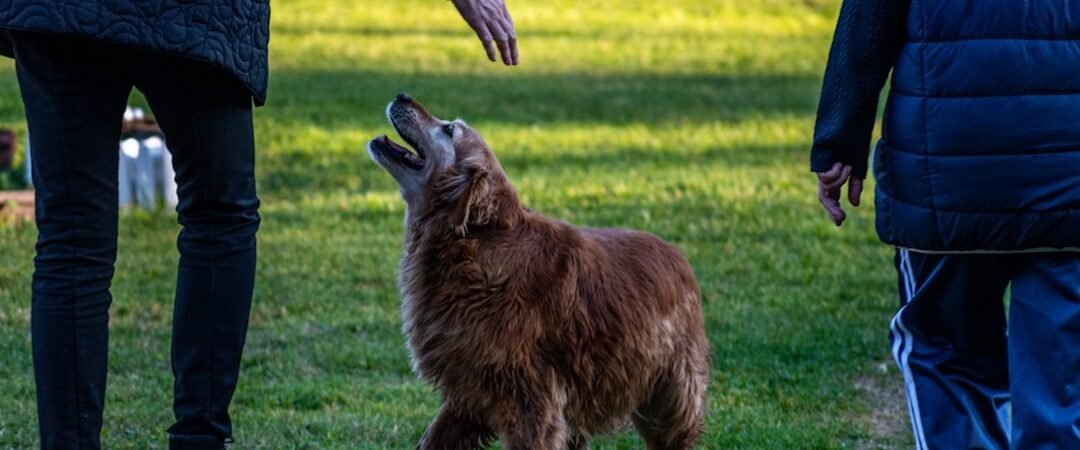
Golden Retrievers have a reputation for being easy to train, and in many ways they can be. They are typically bright, social dogs who learn quickly. The catch is that they can also be extremely excited by the world around them. People are exciting. Dogs are exciting. Smells are exciting. That patch of grass over there may apparently be the most important thing they have ever encountered.
That is why I would start recall training from day one. Not because your puppy needs to be off leash immediately, but because coming back to you is one of the most useful skills you can build, and it takes time to make it reliable around all the things a Golden Retriever finds rewarding.
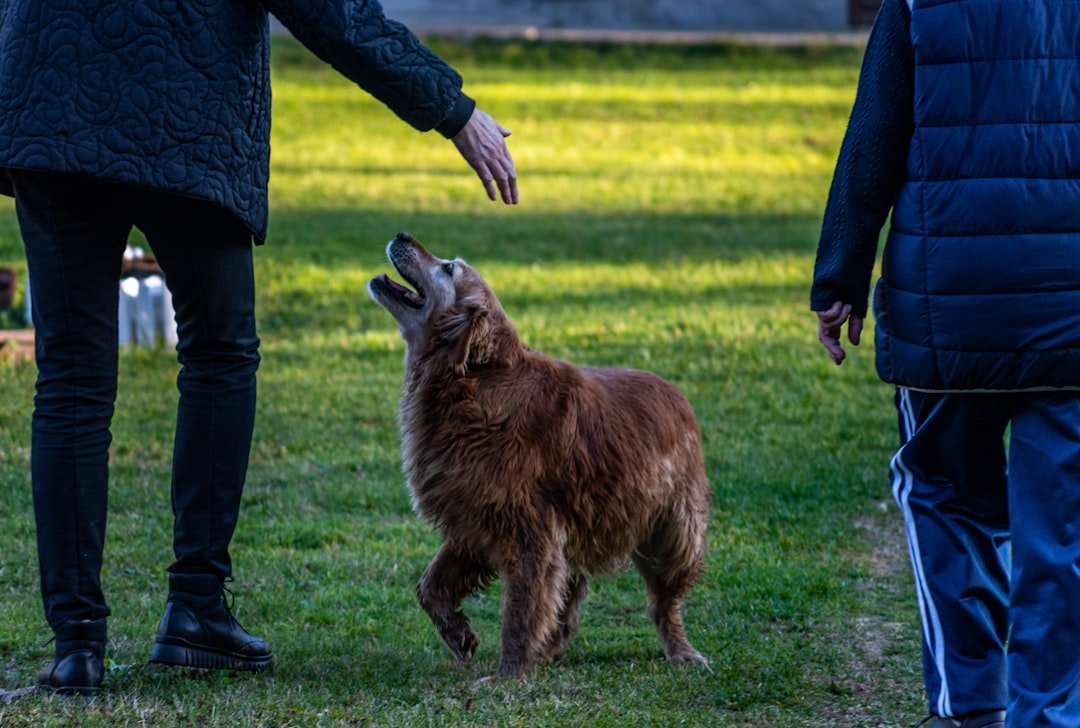
Dog trainer and behavior consultant Ali Smith puts the central rule very simply: “Be rewarding to them, and avoid scolding.”
This approach also fits with current evidence-based guidance. The American Veterinary Society of Animal Behavior’s humane dog-training guidance recommends reward-based methods for dog training rather than aversive techniques.
What Does Recall Actually Mean?
Recall is simply your puppy returning to you when asked. We might use “come,” a whistle, or another consistent cue. The word itself is less important than what your puppy learns it predicts.
I do not think you need to panic if you say your recall cue more than once. A cheerful second “come!” while your puppy is making their way toward you is very different from turning it into a frustrated chant. What I would avoid is “come, come, COME!” getting louder and more annoyed while your puppy learns that the first several cues do not matter.
Most importantly, when they eventually reach you, reward the return you got. Do not scold them for taking too long. If arriving at you predicts frustration or punishment, you are making the next recall harder, not easier.
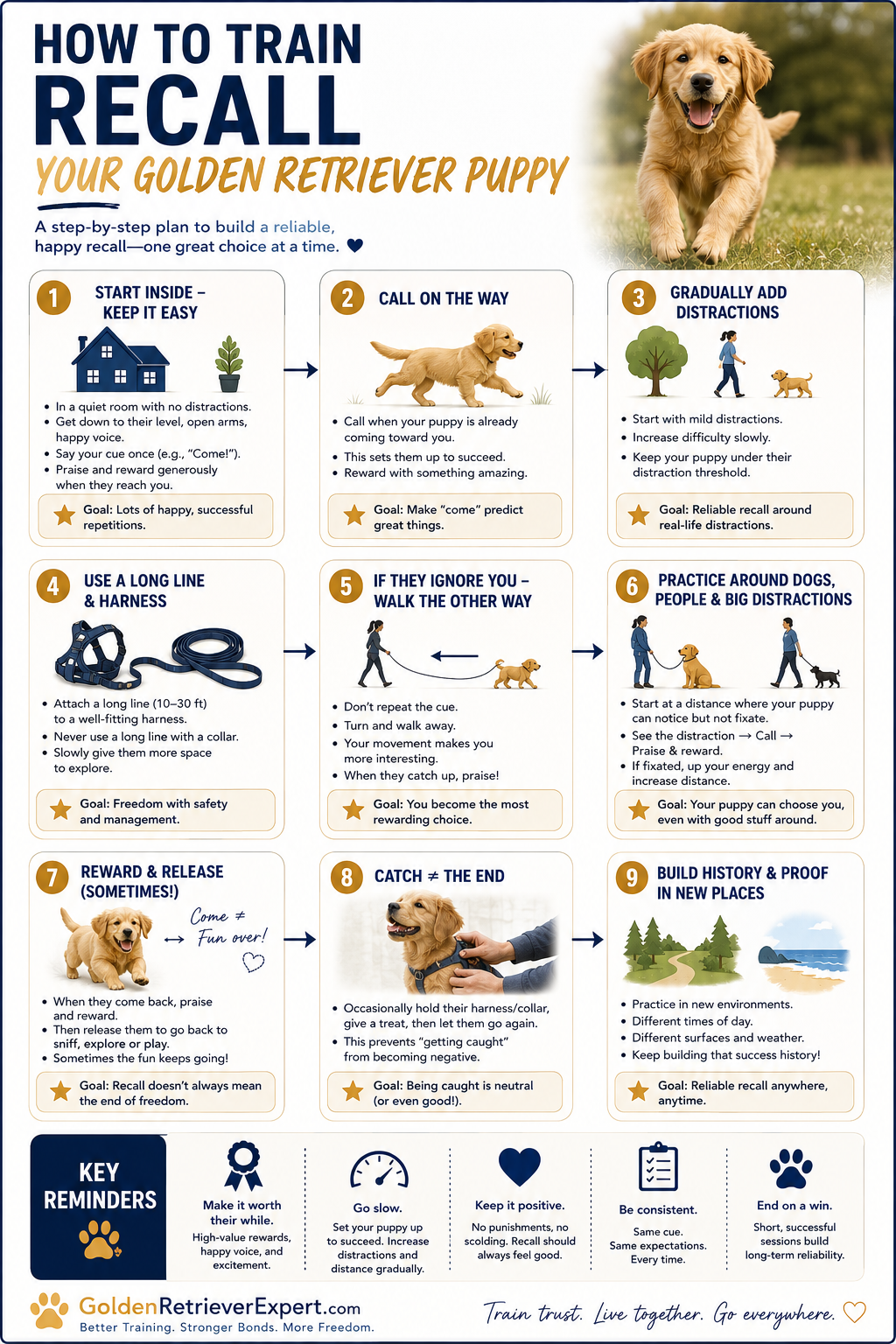
Start Golden Retriever Recall Training Somewhere Easy
One of the biggest mistakes people make is testing recall before they have really trained it. A busy park full of dogs is not the place to discover whether a puppy who has practised “come” three times in the kitchen understands it.
Start indoors or in another very low-distraction environment. Keep the distance short and make success easy. Sometimes say your recall cue when your puppy is already on the way toward you. They are already performing the behavior, so you can pair the word with that movement and then make arriving at you really worthwhile.
Praise as they get it right, then reward. Food is usually an excellent option for a Golden, although play, toys and access to something they want can all be useful rewards too.
If you are working through puppy skills more broadly, our complete Golden Retriever puppy training guide explains how recall fits alongside biting, potty training, leash skills, sleep and socialization.
Gradually Add Distance and Distractions
Once your puppy is happily responding in an easy environment, make the exercise a little harder rather than jumping straight to the hardest possible version.
Add distance gradually. Then add mild distractions. Practise in different rooms, the yard, and safe outdoor spaces. A behavior that looks perfect in your kitchen has not automatically been learned in a park, on a trail or beside another dog.
Goldens in particular can get very excited about people and other dogs, so distance is enormously useful. Let your puppy see the person, dog or other distraction from far enough away that they can still think. Recall them, then praise and reward.
If they cannot disengage and are simply fixated, you are probably too close. Create more distance. You can also up your own energy: move, become interesting and make following you a much more appealing option than standing still and getting increasingly stern.
This is closely related to the distraction work in our Golden Retriever puppy leash-training guide, where distance and calm observation are also incredibly useful skills.
Use a Long Line and Harness While Recall Is Developing
Once you start practising outside, a long line gives your puppy more freedom without gambling on a recall that is not ready yet.
Always attach a long line to a well-fitting harness, not a collar. If a puppy accelerates and reaches the end of a long line, you do not want that force concentrated through their neck. Ali’s detailed Rebarkable guide to using a long line explains the same safety principle and how long lines can be used for recall training and management.
Give your puppy space gradually. The long line is not there so you can reel them back to you; it is management and a safety net while you build the skill.
Recommended equipment:
Affiliate disclosure: GoldenRetrieverExpert.com may earn a commission from qualifying purchases made through some links, at no extra cost to you.
What If Your Puppy Ignores the Recall?
If your puppy does not respond while they are safely managed on the long line, do not stand still repeating the cue and do not use the line to drag them back.
Walk the other way.
Your movement helps make you relevant again. Encourage them, move with some energy, and when they catch up, praise and reward. The long line prevents the puppy disappearing toward the distraction, but the lesson is still that choosing you pays.
Practising Recall Around Dogs and People
For an excitable Golden Retriever, this is where recall training becomes genuinely useful.
Start far enough from the distraction that your puppy can see it without becoming completely consumed by it. The pattern is simple: they see the person or dog, you recall, they return, and you praise and reward.
As that becomes easy, you can work a little closer. If your puppy becomes fixated, increase distance again or increase your energy and movement. Training at the right distance gives your puppy an achievable choice instead of asking for something they are not yet capable of doing.
It also matters socially. Goldens can be enthusiastic greeters, but another dog does not necessarily want a Golden Retriever rushing straight into their space. Reliable recall gives you a way to interrupt that approach and be a more responsible dog guardian. Our Golden Retriever puppy socialisation guide explains why observing calmly can be more valuable than greeting everybody.
Do Not Make Recall Mean “The Fun Is Over”
This is one of the most important parts of recall training and one of the easiest to accidentally get wrong.
If every recall means being caught, clipped onto the leash and taken home, your puppy can learn that coming back makes good things disappear. You may eventually create a dog who returns to roughly your vicinity but stays conveniently outside grabbing distance.
So sometimes recall your puppy, praise and reward them, and then release them straight back to sniffing, exploring or playing. Coming to you does not always have to end their freedom.
It is also worth occasionally taking hold of the harness or collar, rewarding, and releasing them again. Being physically caught should not predict something unpleasant either.
When Can a Golden Retriever Puppy Go Off Leash?
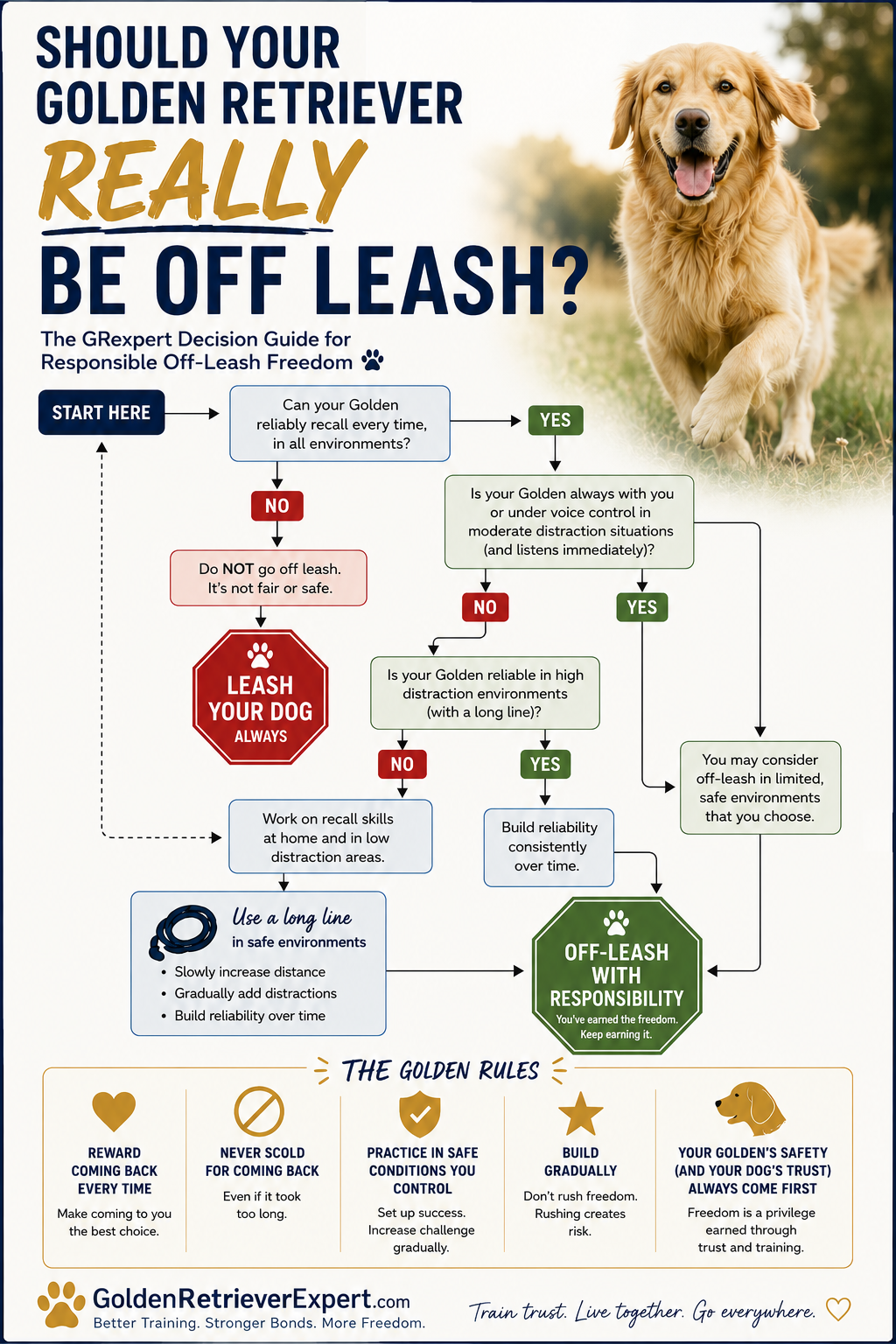
There is no magic age. Off-leash freedom should depend on the individual dog, the environment, local rules and the reliability you have actually trained.
A long line gives you a useful bridge. Gradually increase the puppy’s freedom while practising in different environments and around realistic distractions. Do not unclip simply because recall looked good twice in an empty field.
Even a dog with excellent recall should only be off leash where doing so is legal and safe. Roads, livestock, wildlife, other dogs and people all change the risk calculation. Responsible freedom is earned through training and good judgement, not assumed because a Golden Retriever is friendly.
Can You Ruin a Recall Cue?
You can certainly make one less useful by repeatedly using it when you have no realistic chance of success, turning it into background noise, or pairing it with frustration and punishment. But saying “come” twice is not some catastrophic training failure.
Keep the cue upbeat. Set your puppy up to succeed. Reward them for responding. If you notice yourself becoming frustrated, manage the situation and make the next repetition easier.
Should You Stop Rewarding Recall Eventually?
You can vary rewards as the behavior becomes established, but I would not be in a hurry to make returning to you unrewarding. Recall is too valuable for that.
You can use food, toys, play, praise and real-life rewards such as being released back to sniff. What matters is that your puppy continues to have a good reason to choose you when the rest of the world is competing for their attention.
Ali’s puppy recall guide on Rebarkable goes deeper into building recall through progressively harder environments, and the AVSAB explanation of reward-based training provides useful background on why teaching with rewards is preferred over aversive methods.
The Golden Rule of Golden Retriever Recall
Your puppy does not owe you a recall simply because you said the word. You build it by making coming back a behavior with an enormous history of success.
Start easy. Be rewarding. Increase difficulty gradually. Use a harness and long line while your puppy is learning. Walk the other way rather than hauling them toward you if they get distracted. Practise around people and dogs at a distance your puppy can cope with, and sometimes send them straight back to having fun after they return.
Most of all, never punish a puppy for eventually coming back to you. Whether they took two seconds or twenty, the behavior you have in front of you at that moment is exactly the one you want more of.