
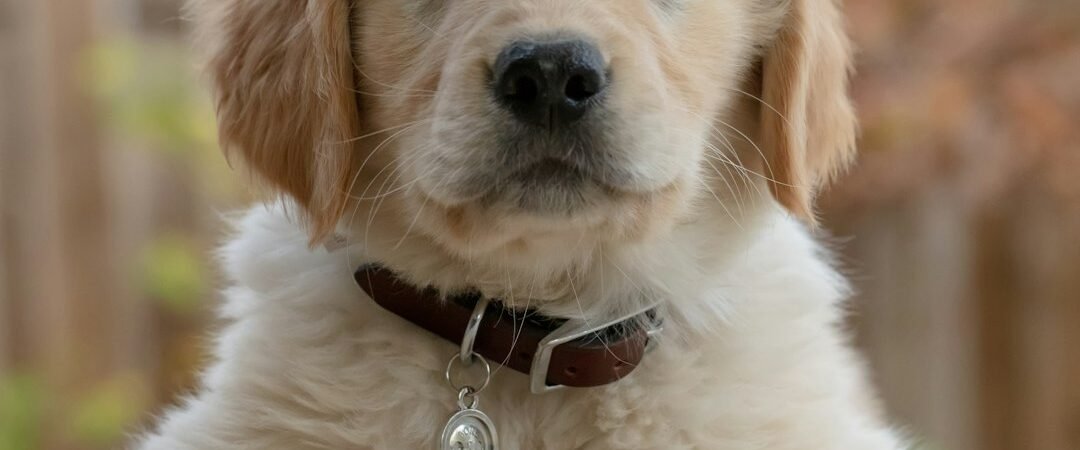
By the time most owners meet their Golden Retriever puppy properly, an enormous amount of development has already happened.
Eight-week-old puppies can walk, run, wrestle, bite each other, investigate new things, eat solid food and make surprisingly strong opinions known.
Newborn puppies cannot do any of that.
They arrive extraordinarily dependent on their mother and breeder, with their eyes and ears closed and very limited ability to regulate their own bodies. Over the next eight weeks, that changes remarkably quickly.
Writer Sophie Bennett looks at how newborn Golden Retriever puppies develop from birth to around eight weeks, with perspective from professional dog trainer and behavior consultant Ali Smith.
What is a newborn Golden Retriever puppy like?
Very different from the fluffy eight-week-old puppy people picture when they think about bringing a Golden home.
During the neonatal period, puppies spend most of their time nursing and sleeping. They are born with their eyes closed and hearing not yet functioning normally, and they depend heavily on their mother for warmth, nutrition and basic care.
This is not the stage for a breeder to be trying to produce tiny obedience champions.
The priorities are much more fundamental: healthy nursing, warmth, appropriate weight gain, maternal care, cleanliness and recognizing quickly when an individual puppy is not thriving.
VCA’s puppy-raising guidance notes that puppies are born with their eyes closed and that growth should be monitored closely during these first weeks.

Birth to 2 weeks: the neonatal period
The first couple of weeks are mostly about survival and very basic development.
Newborn puppies are not miniature versions of eight-week-old pups. Their movement is initially limited, they cannot yet see normally, and their nervous systems are still developing rapidly.
A good breeder is watching the litter rather than simply admiring it.
That means monitoring whether puppies are nursing, whether they are gaining weight consistently, whether they appear warm and settled, and whether any puppy is becoming weak, persistently vocal or separated from the group.
Birth weight itself can vary, so I would be wary of treating one internet number as the correct weight for every newborn Golden Retriever. The more useful information is the individual puppy’s trend.
VCA advises routinely weighing puppies because failure to gain weight can be an important warning sign. Their guidance says many puppies roughly double their birth weight during the first week, but that is a monitoring reference rather than a competition between littermates.
When do Golden Retriever puppies open their eyes?
Usually during the second week.
Veterinary guidance generally places eye opening somewhere around seven to fourteen days, with some normal individual variation. The eyes do not suddenly switch from closed to fully adult vision overnight either.
As the eyes begin opening, the puppy’s sensory world starts expanding rapidly.
If the eyelids are swollen, bulging or producing discharge, or if the eyes have not opened when expected, that is something for the breeder and veterinarian to take seriously rather than manually forcing them open.
VCA’s birth-to-weaning guidance gives a useful overview of those early physical milestones.
When do puppies start hearing?
Hearing develops during the transition out of the neonatal period as the ear canals open and sensory ability increases.
This is one reason the puppy you see at three weeks can feel dramatically more “awake” than the puppy from a week earlier.
They are not just becoming stronger. Their access to the environment is changing.
Around 2 to 3 weeks: the transitional period
This is where things start becoming visibly more interesting.
Merck Veterinary Manual describes roughly 13–19 days as the transitional period, when eyes and ears open, motor skills improve and social interaction with littermates increases.
Puppies begin trying to stand and move with more purpose rather than simply crawling toward warmth and milk.
They are still extremely young.
But the litter is beginning to look less like a pile of sleeping potatoes and more like a group of developing dogs.
Around 3 to 4 weeks: walking, play and weaning begin
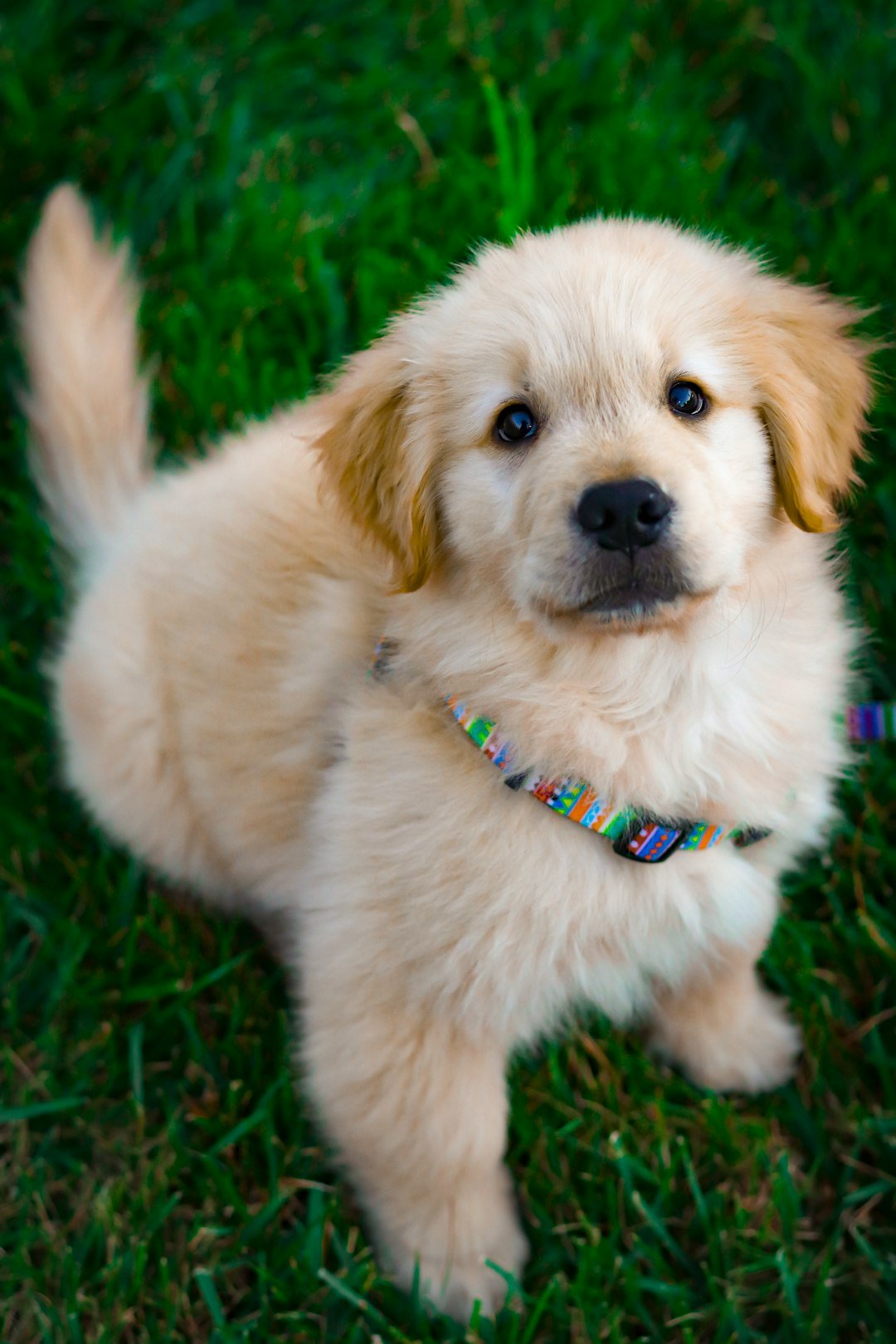
By three to four weeks, puppies become much more mobile.
They start walking more confidently, interacting more deliberately with littermates and experimenting with play.
This is also around the time the transition toward solid food begins.
VCA describes weaning as naturally starting at around three to four weeks as teeth develop and puppies become increasingly capable of eating food other than milk.
That does not mean their mother becomes irrelevant.
Weaning is a process, not a switch.
Puppies continue learning through interactions with their mother and littermates while their nutritional dependence gradually changes.
What does puppy play teach them?
A lot.
Play is not empty time between “real” training sessions.
Puppies are learning about bodies, movement, social interaction, frustration, recovery and the effects of their own behavior.
They grab each other. They chase. They climb. They get interrupted. They discover that another puppy may object when they are too much.
I would not turn that into the simplistic claim that littermates magically teach perfect “bite inhibition” by eight weeks.
They are still puppies when they leave.
But those early interactions are part of normal social development, which is one reason removing puppies from their litter extremely early is not something to treat casually.
4 to 5 weeks: the world gets bigger
At this point the puppies are much more capable of exploring.
This is where thoughtful breeder-led exposure starts becoming especially valuable.
That might include different safe surfaces, normal household noises, gentle handling, small environmental changes, appropriate toys and carefully managed interaction with people.
The point is not to bombard puppies with a checklist.
It is to let their world expand in manageable pieces while making sure they still have enormous opportunity to sleep, nurse or eat, play with their litter and simply be puppies.
More exposure is not automatically better exposure.
A puppy overwhelmed twenty times in a day is not “better socialised” because the breeder ticked twenty boxes.
5 to 6 weeks: increasingly social, increasingly mouthy
By five to six weeks, Golden puppies can be spectacularly busy.
They are moving much more confidently, playing vigorously, carrying things, using their mouths and interacting actively with people and littermates.
This is exactly the sort of stage where Golden Retriever ancestry starts becoming entertainingly obvious.
They are retriever puppies. Mouths are involved.
Good puppy raising at this point is less about trying to eliminate normal mouthing and more about giving puppies suitable things to explore, helping them cope with gentle handling, and allowing varied but sensible experiences.
6 to 7 weeks: confidence, learning and individual differences
By six or seven weeks, individual differences can be easier to see.
One puppy may rush toward novelty. Another may stop, assess and then investigate. One may recover quickly from a small surprise. Another may need a little more time.
Those observations are useful.
They are not prophecies.
I would be cautious of anybody who watches a six-week-old puppy for fifteen minutes and confidently announces its finished adult personality.
Temperament has genetic foundations, and early behavior can absolutely give us information, but development and experience are still happening at extraordinary speed.
This is why a breeder who has observed the puppies every day usually has more useful matching information than a buyer choosing whichever puppy climbed into their lap first.
Our guide to choosing a Golden Retriever puppy and responsible breeder explains why puppy selection should be more thoughtful than a single meeting.
7 to 8 weeks: still babies, just much more capable ones
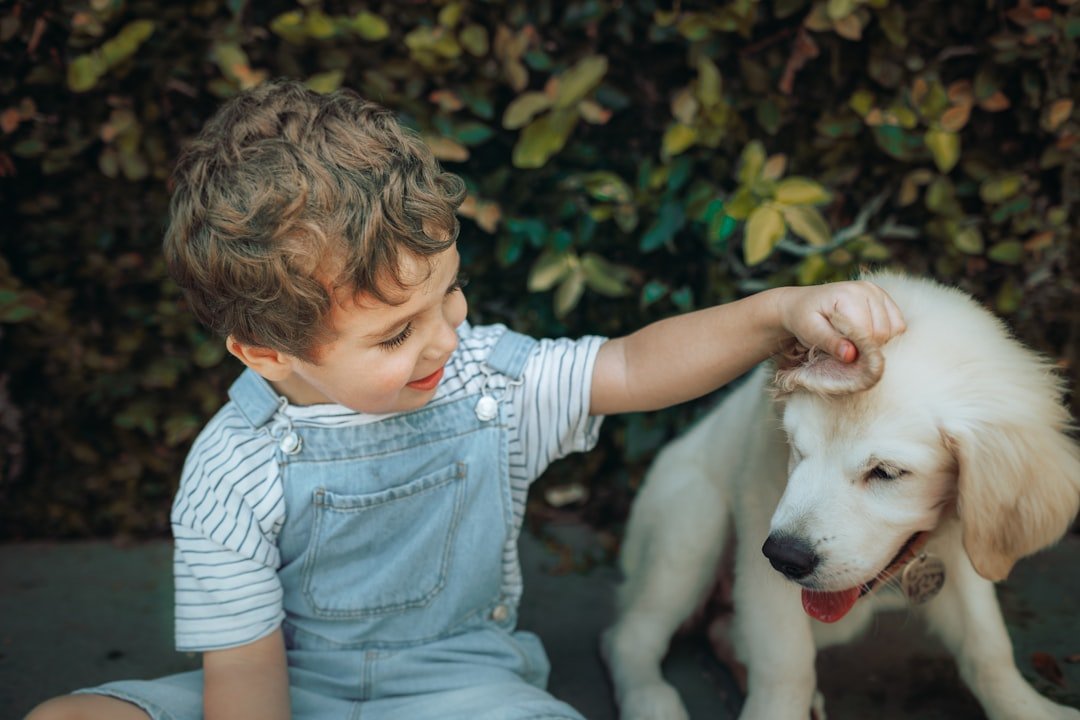
At seven to eight weeks, puppies can look impressively competent compared with newborns.
They can run, play, investigate, eat independently, interact socially and learn extremely quickly.
They are also still babies.
Their bladder control is immature. Their attention is brief. Emotional regulation is limited. Sleep remains enormously important. They can become overwhelmed, overtired and mouthy very easily.
That is the puppy most owners bring home.
Our 8-week-old Golden Retriever puppy guide picks up exactly where this article leaves off.
When are Golden Retriever puppies fully weaned?
Weaning is gradual.
It commonly begins around three to four weeks, with puppies progressively eating more solid puppy food as the following weeks pass. Veterinary guidance commonly places complete weaning around the seven-to-ten-week range depending on the litter and management.
The important thing for puppy buyers is not to obsess over one exact day.
A responsible breeder should be monitoring the puppies and mother and managing the transition appropriately.
Young Golden Retrievers also need appropriate puppy nutrition once they are eating solid food. Our guide to choosing food for a Golden Retriever puppy covers what matters once the feeding job becomes yours.
When should Golden Retriever puppies leave their mother?
Most responsibly bred puppies go to their new homes from around eight weeks or later, depending on development, breeder practice and local law.
I would avoid making a blanket legal claim here because minimum-age rules vary by location.
From a developmental perspective, the time puppies spend with their mother and littermates matters.
Merck notes that experience with the mother and littermates during the first seven to eight weeks plays an important role in social development. VCA similarly advises that puppies generally remain with their mother and littermates through the early weaning and social-development period.
What should a responsible breeder be doing before 8 weeks?
Not running a miniature boot camp.
I would want to see sensible foundations such as:
- careful monitoring of weight, health and development;
- appropriate veterinary and parasite care;
- safe, clean housing with suitable temperature and rest;
- gradual weaning onto appropriate puppy food;
- gentle, positive human handling;
- safe opportunities to experience different surfaces, sounds and environments;
- time with the mother and littermates;
- appropriate toys and opportunities for exploration;
- observation of how individual puppies respond and recover;
- plenty of sleep and periods where absolutely nothing exciting happens.
That last one matters.
Puppies do not need every waking minute optimized.
Learning to rest while ordinary life happens is useful too.
What about early socialisation?
The socialisation period begins before the puppy comes home.
Merck places the broader canine socialisation period from roughly three weeks onward, when puppies become increasingly interactive and exploratory.
A breeder therefore has an important early role.
But socialisation should not mean “meet the maximum possible number of people and dogs.”
We want puppies learning that novelty can be safe and manageable, not that every living thing must be greeted.
For owners taking over at eight weeks, Ali’s free Ultimate Socialization eBook on Rebarkable is a useful next step for building those experiences thoughtfully.
Can you tell a puppy’s adult temperament at 8 weeks?
Not with certainty.
You can observe tendencies.
You can look at confidence, recovery, social interest, persistence, activity and how the puppy responds to ordinary challenges.
A breeder can compare those patterns across the litter and against previous generations.
But an eight-week-old puppy is not a finished dog.
Genetics matter. Early experience matters. What happens after the puppy goes home matters.
So I would use early temperament information for thoughtful matching, not fortune telling.
Should puppy buyers visit newborn puppies?
Not automatically.
Very young puppies are vulnerable, and breeders need to think seriously about infection control, the mother’s comfort and whether a visit provides any real benefit at that stage.
A responsible breeder may limit early visitors or delay in-person visits until the puppies are older.
That is not necessarily secrecy.
Look at the breeder’s overall transparency, health testing, communication and willingness to show you how the dogs live rather than treating unlimited access to newborn puppies as the definition of responsible breeding.
From birth to eight weeks is only the beginning
Those first eight weeks matter enormously.
They are also not the whole dog.
By eight weeks, your Golden Retriever puppy has already moved from complete neonatal dependence to being a mobile, social, rapidly learning little dog.
Then you take over a large part of the developmental job.
Sleep, toilet training, handling, alone-time skills, recall, appropriate social exposure and learning how to live in your household all begin building on what the breeder started.
Related Golden Retriever puppy guides: See our Golden Retriever litter-size guide, 8-week-old puppy guide, Golden Retriever growth chart, and responsible breeder and puppy-selection guide.
The bottom line
Newborn Golden Retriever puppies change extraordinarily quickly during their first eight weeks.
The first two weeks are dominated by nursing, sleep and very basic physical development. Eyes and ears then open, mobility improves, play appears, weaning begins and the puppies’ social world expands dramatically.
By eight weeks they can look impressively capable, but they are still very young dogs whose development is nowhere near finished.
A good breeder’s job is not to manufacture a perfectly trained eight-week-old puppy.
It is to protect health, support normal development, provide thoughtful early experiences and give the puppy a strong enough foundation for the owner to continue building on.