
If you ask ten Golden Retriever owners what the best puppy food is, there is a decent chance you will get twelve answers and at least one argument.
Dog-food discussions get emotional very quickly.
Ingredient lists are scrutinised. Marketing terms get repeated as if they are nutritional qualifications. Somebody’s dog lived to fourteen on one brand, so apparently the case is closed.
I would approach it differently.
The best food for a Golden Retriever puppy is one that is complete and balanced for growth, appropriate for a dog expected to mature into a larger adult, produced by a company that can answer serious nutrition questions, tolerated well by the individual puppy, and practical enough that you can feed it consistently.
Writer Sophie Bennett looks at what that actually means, with perspective from professional dog trainer and behavior consultant Ali Smith.
Golden Retrievers need controlled growth, not maximum growth
Golden Retriever puppies grow quickly.
That does not mean we should make them grow as quickly as possible.
With larger-breed puppies, excess energy intake and inappropriate mineral balance can contribute to orthopedic problems. The goal is steady, controlled growth while maintaining an appropriate body condition.
Our Golden Retriever growth chart explains why a heavier puppy is not automatically a better-growing puppy.
Look for a complete and balanced growth diet
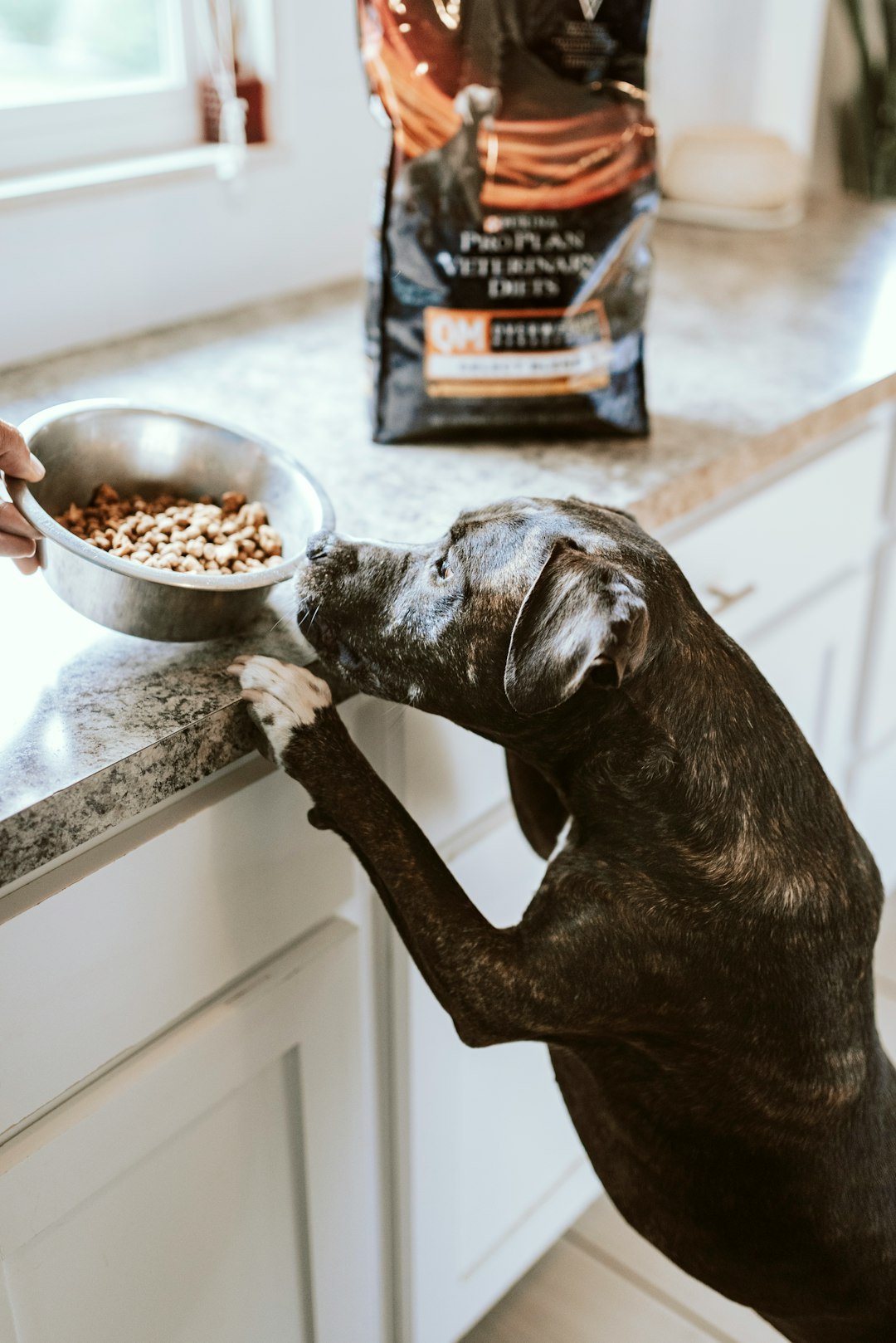
In the US, check the nutritional adequacy statement on the label.
The Association of American Feed Control Officials explains that this statement tells you whether the food is formulated to meet recognised nutrient profiles or has passed appropriate feeding trials for a particular life stage.
For a Golden puppy, you want a diet appropriate for growth and suitable for dogs expected to reach a large adult size.
This matters more than whether the front of the bag says “natural,” “premium,” “holistic” or has a photograph of a wolf standing next to some blueberries.
Why large-breed puppy formulation matters
Golden Retrievers fall into the group where controlled mineral intake and calorie intake during growth deserve particular attention.
Calcium is one of the nutrients people sometimes think they should add “for strong bones.”
Please do not freestyle calcium supplementation in a growing Golden.
A properly formulated puppy diet is designed to provide nutrients in appropriate proportions. More is not automatically better.
What should I look for in the manufacturer?
This is an area where the World Small Animal Veterinary Association’s nutrition resources are genuinely useful.
Rather than judging a food by marketing language, ask whether the company can answer questions such as:
- Who formulates the diet?
- What are that person’s qualifications?
- Does the company employ appropriately qualified nutrition experts?
- What quality-control processes are used?
- Where is the food manufactured?
- Can the company provide detailed nutrient information when requested?
- What research or feeding data supports the diet?
I care much more about those answers than whether chicken appears as ingredient number one.
Is meat as the first ingredient important?
Not nearly as much as pet-food marketing has trained people to believe.
Ingredient lists are ordered by weight before processing, which means ingredients with high water content can appear prominently.
An ingredient list also tells you what ingredients went into a recipe. It does not, by itself, tell you whether the finished diet provides appropriate nutrition or whether the manufacturer has strong formulation and quality-control practices.
Judge the food as a diet, not as a shopping list.
Grain-free is not automatically better
I would not choose a grain-free diet for a healthy Golden Retriever puppy simply because grain-free sounds more premium.
Dogs do not need their food selected according to human diet trends.
If your puppy has a diagnosed medical reason for a particular formulation, that is different.
Otherwise, make the decision based on nutritional suitability and evidence rather than the assumption that grains are inherently undesirable.
How much protein should a Golden Retriever puppy have?
This is another area where people can become fixated on one number.
Protein matters. So does everything around it.
A complete growth diet has to provide the correct overall nutrient profile, sufficient energy, appropriate mineral balance and good digestibility.
I would not choose between puppy foods simply by picking whichever bag advertises the highest protein percentage.
How calorie-dense is the food?
This matters more than many owners realise.
Two foods can recommend similar-looking cup amounts while providing very different calories.
That is why our guide to how much to feed a Golden Retriever puppy recommends watching calorie intake and body condition rather than copying somebody else’s number of cups.
High calorie density is not automatically bad. It simply changes how much food your puppy actually needs.

Will your puppy actually tolerate it?
A theoretically perfect food is not especially useful if your puppy consistently develops gastrointestinal problems on it.
Look at the actual dog.
Are stools reasonably consistent?
Is body condition appropriate?
Is the coat and skin healthy?
Is the puppy developing normally?
Are they willing to eat it?
Persistent vomiting, diarrhea, poor growth, significant itching or other concerns deserve veterinary investigation rather than endless food switching based on internet guesses.
Should you keep the breeder’s food initially?
Usually, yes, at least for the first few days unless there is a good reason not to.
Your eight-week-old puppy has already changed home, people, routine, smells and sleeping arrangements.
There is rarely a prize for changing the food on the drive home too.
If you want to move to another suitable diet, a gradual transition is usually easier on the digestive system.
Wet food, dry food or fresh food?
The format matters less to me than whether the diet is nutritionally appropriate for growth and whether the company behind it is credible.
Dry food is convenient, easy to measure and particularly useful when you want to reserve part of the puppy’s normal ration for training.
Wet or fresh complete diets can also work, but check the nutritional adequacy carefully and account for calories.
Do not assume “fresh” means nutritionally superior simply because the food looks more like something a human would eat.
Can I feed a homemade diet?
You can feed a properly formulated homemade diet.
The important words are properly formulated.
Growing puppies have little margin for casual nutritional experiments, particularly larger-breed puppies where mineral balance matters.
If you genuinely want to feed homemade, work with an appropriately qualified veterinary nutrition professional rather than assembling recipes from social media.
What about raw feeding?
Raw diets introduce additional questions around nutritional balance and pathogen risk.
If an owner wants to pursue raw feeding, I would want the same standard applied as to any other diet: is it demonstrably complete and balanced for growth, who formulated it, what quality controls exist, and what are the practical risks to the dog and household?
“Raw” is a food format, not proof of nutritional quality.
Should Golden Retriever puppies have supplements?
Not by default.
If you are feeding a complete and balanced growth diet, throwing extra vitamins and minerals into the bowl can upset that balance.
Calcium supplementation is particularly something I would avoid unless your veterinarian or veterinary nutritionist has given you a specific reason and dose.

What about treats and training food?
This is where Golden Retriever owners can accidentally undo a carefully calculated feeding plan.
Goldens are often extremely food motivated.
That is useful. Use it.
Take some of the puppy’s normal daily food and use it during training rather than automatically adding a large second calorie budget of treats.
Keep richer treats valuable for situations where you genuinely need them.
Do Golden Retrievers need breed-specific food?
Not necessarily.
A bag with a Golden Retriever on the front may be perfectly suitable.
A high-quality large-breed puppy diet without a Golden Retriever on the packaging may be equally suitable.
The breed photograph is marketing. The nutritional formulation is what matters.
How do I know the food is working?
Watch the dog over time.
Your puppy should grow steadily while remaining appropriately lean.
They should generally have good energy, normal development and a healthy coat and skin.
Stool quality should be reasonably consistent.
Your veterinarian can help assess growth and body condition at puppy visits.
Our Golden Retriever feeding chart by age explains how feeding patterns usually change as the puppy develops.
My practical shortlist criteria
If I were comparing puppy foods for a Golden Retriever, I would ask:
- Is it complete and balanced for growth, including appropriate use for a larger-breed puppy?
- Who formulated it and what are their qualifications?
- Can the company answer detailed nutritional questions?
- Does the company have credible manufacturing and quality-control processes?
- Is the calorie density practical for this puppy?
- Does the puppy maintain an appropriate body condition on it?
- Does the puppy tolerate and willingly eat it?
- Can the owner afford and reliably obtain it?
That last one matters.
A wonderful food you cannot consistently afford or source is not a very practical long-term diet.
Related feeding guides: Pair this with how much to feed a Golden Retriever puppy, our feeding chart by age, and what Golden Retrievers eat from puppyhood to adulthood.
Useful external reading: For evaluating puppy food rather than relying on front-of-bag marketing, use AAFCO’s label and nutritional-adequacy guidance alongside WSAVA’s nutrition toolkit.
A practical checklist for comparing puppy foods
Once you have narrowed down foods formulated for growth, check the nutritional adequacy statement and whether the diet is appropriate for the expected adult size of your Golden. Look for a manufacturer that can explain who formulates its diets, how they are tested and what quality controls are in place. Cost per day, availability and your puppy’s tolerance matter more in the long term than a fashionable ingredient printed prominently on the bag.
Do not change foods repeatedly just because a puppy seems enthusiastic about a different flavour. If you need to switch, introduce the new food gradually when appropriate and monitor stool quality, appetite and body condition. A puppy that is losing weight, developing persistent digestive symptoms or failing to grow as expected should be assessed by your veterinarian rather than managed by trial and error alone.
The bottom line
The best Golden Retriever puppy food is not necessarily the bag with the prettiest ingredient list, the highest protein percentage or the most expensive branding.
Choose a nutritionally complete growth diet appropriate for the expected adult size of the dog, produced by a company capable of answering serious nutrition and quality-control questions.
Then look at the puppy in front of you.
Feed for steady growth and healthy body condition, adjust portions as they develop, and use your veterinarian when something genuinely does not look right.