
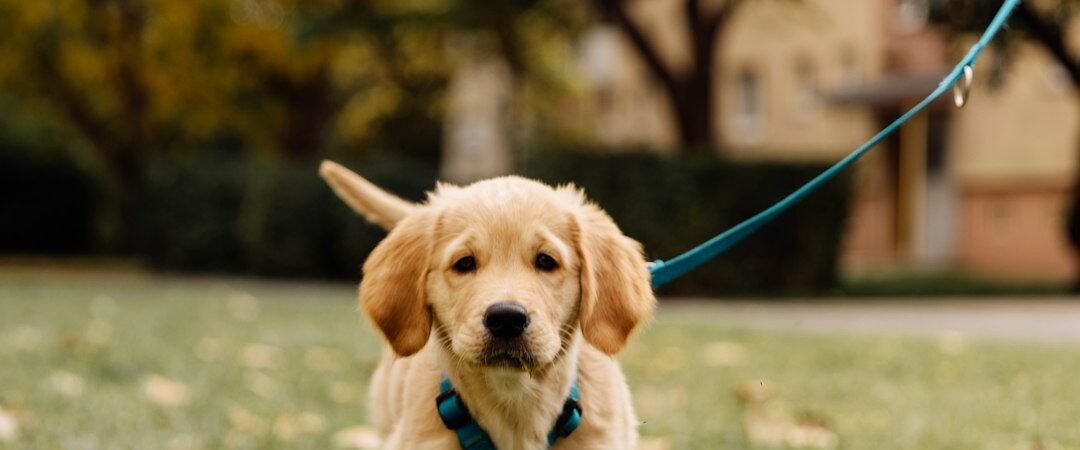
Golden Retriever leash training is worth starting much earlier than most people think. You do not need to wait until your puppy is old enough for proper walks, and you certainly do not need to wait until they are large enough to pull you down the street. In fact, one of the easiest ways to teach a Golden Retriever puppy to walk nicely on leash is to begin before the leash is doing much work at all.
Professional dog trainer and behavior consultant Ali Smith starts with something extremely simple: reward the puppy for walking alongside you.
“You can start from day one, even without a leash. Just start rewarding your puppy for walking alongside you.”
That might happen while you move around the house, cross the garden or walk from one room to another. At this stage you are not trying to create a competition-style heel. You are simply teaching your puppy that moving with you and staying reasonably close is worthwhile.
That foundation matters particularly with Golden Retrievers because they grow remarkably quickly. A little puppy pulling toward somebody for a cuddle can seem harmless. Let that same behavior become thoroughly rehearsed, though, and before long you have a large adolescent Golden who has learned that putting their weight into the leash is how they get where they want to go.
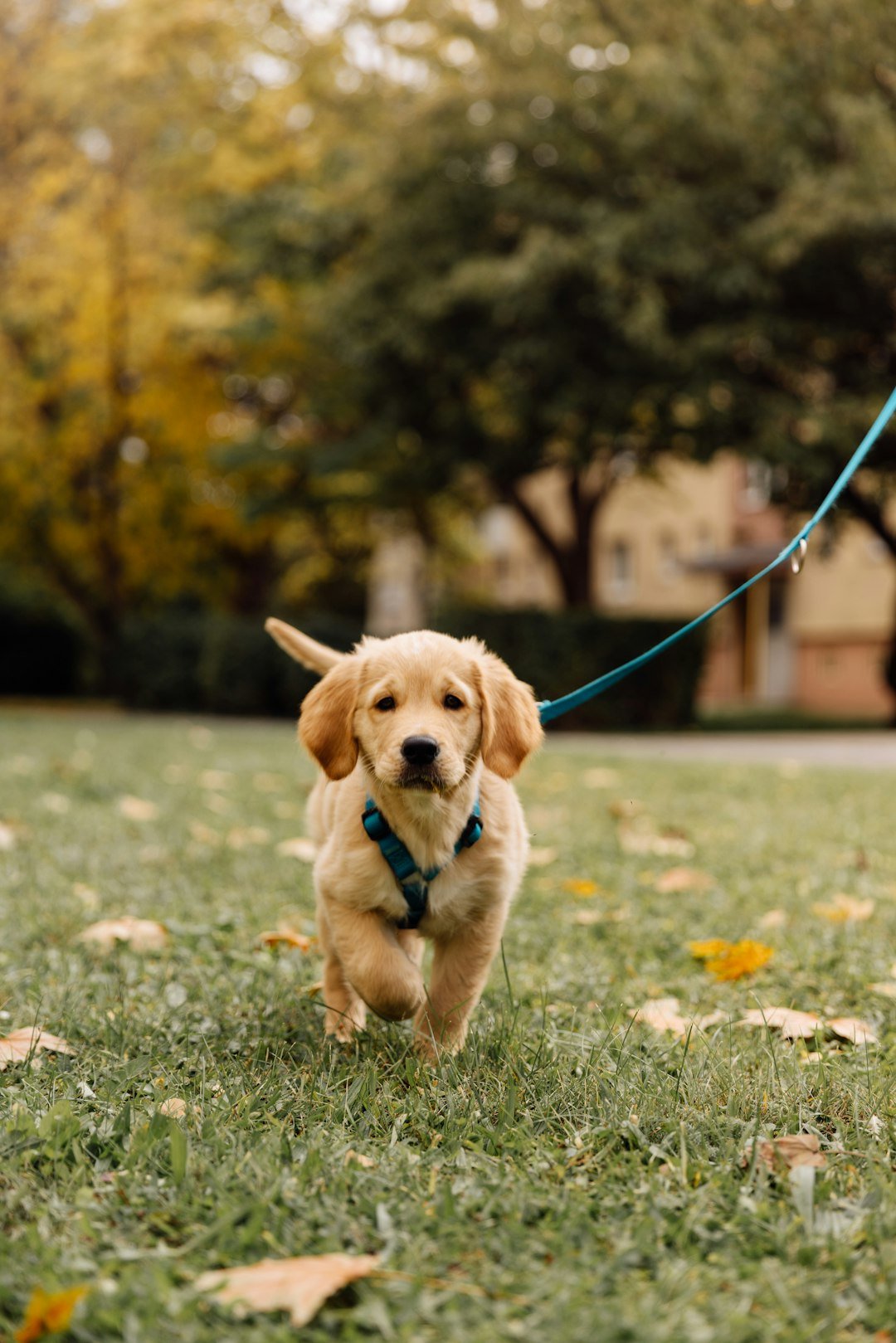
If you are working through puppy training more generally, our Golden Retriever Puppy Training: A Complete Guide explains where leash work fits alongside biting, toilet training, recall, sleep and socialization. When you are ready to work specifically on coming back around those exciting people and dogs, move on to our Golden Retriever puppy recall training guide.
Start Loose-Leash Training Before You Even Need the Leash
Loose-leash walking is really two different lessons. The first is teaching your puppy how you would like them to move with you. The second is teaching them how to cope with the equipment itself.
The first lesson can begin immediately. Whenever your puppy naturally walks beside you, praise and reward them. Take a few steps together, reward again, then carry on with your day. These tiny repetitions create a reinforcement history for being near you while you move, without requiring a formal training session or waiting for your puppy to make a mistake first.
This is also why leash training does not need to mean drilling a puppy into a rigid heel position. A Golden Retriever should be allowed to sniff, investigate and experience their environment. The RSPCA’s loose-leash guidance similarly recommends rewarding dogs while the lead is loose and stopping when they pull. The goal is a dog who can move comfortably with you while keeping the leash reasonably slack, not one who spends an entire walk staring up at your face.
Your Golden Retriever Puppy May Need to Get Used to the Leash
Some puppies barely notice when a leash is clipped on. Others find the sensation strange, grab it in their mouths, freeze, bounce around or become fascinated by the mysterious object following them.
Ali points out that this can depend partly on how much thoughtful handling and early exposure a puppy had with their breeder. If the leash itself is a big event, do not immediately turn it into a battle. Let your puppy become comfortable with wearing their collar or harness, having the leash attached and feeling its weight before expecting polished walking.
Keep those early experiences easy and positive. The equipment should become boring background information rather than something your puppy needs to fight, chase or worry about.
What Should You Do When Your Golden Retriever Puppy Pulls?
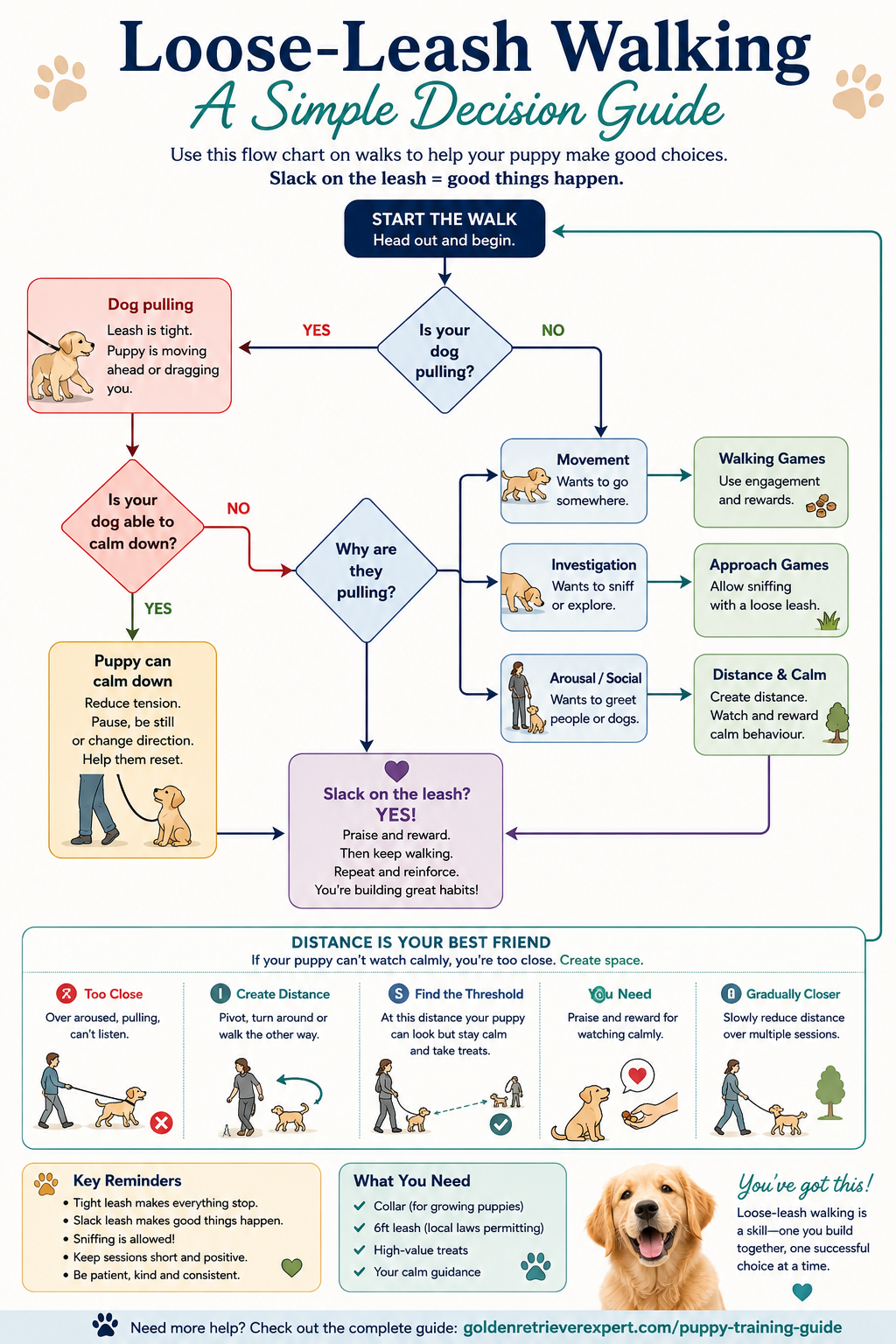
Ali’s rule is beautifully straightforward: when the leash becomes tight, stop and/or change direction. When the leash becomes slack again, praise and reward.
If you have stopped walking, the ability to move forward again can itself become part of the reward. Your puppy gradually learns that pulling does not make the walk progress, while creating slack makes movement happen again.
You can also pivot and walk in another direction rather than getting into a prolonged standoff. The point is not to jerk the puppy back into position or punish them for reaching the end of the leash. You are making one choice less effective and another choice more worthwhile.
“Praise and reward when you feel slack on the leash. If you’ve stopped, that slack can mean you start walking again.”
This distinction matters. If all of our attention arrives when the puppy pulls, but we quietly ignore the hundreds of moments when they are walking beautifully, we are missing most of our opportunities to teach them.
Reward the Walking You Actually Want
Loose-leash training involves a lot of reinforcement, particularly at the beginning. You are building a habit, and habits become stronger when they reliably produce something the puppy values.
For many Golden Retrievers, food makes this wonderfully uncomplicated. Keep rewards small enough that you can use plenty without accidentally turning a ten-minute training session into an additional dinner. Praise the moment you notice the behavior you want, then reward promptly enough that the connection is clear.
As your puppy becomes more experienced, you will not need to pay every few steps forever. The environment itself also contains rewards: moving forward, reaching a good sniffing spot and getting access to something interesting can all reinforce loose-leash behavior.
Affiliate disclosure: Some product links in this article are Amazon affiliate links. If you buy through them, Golden Retriever Expert may earn a commission at no additional cost to you.
If you want an easy training reward to keep in your pocket, these are the treats Ali recommends for this sort of work.
What Leash Is Best for a Golden Retriever Puppy?
A standard six-foot leash is a very useful everyday length for most Golden Retriever puppies, provided that fits the leash laws where you live. It gives a puppy some freedom to sniff and move without putting them so far away that communication becomes difficult.
Ali particularly likes the Halti Training Lead. A versatile training leash can be useful as your puppy develops because you can adapt how you use it rather than buying equipment designed solely to physically prevent pulling.
Local laws do matter, so check the requirements where you live before choosing a leash length for public spaces.
Collar or Harness for a Golden Retriever Puppy?
There is no requirement that every Golden Retriever puppy must be walked on a harness. Ali often likes a straightforward collar like this one, for the wonderfully practical reason that Golden puppies grow so quickly. Whatever you choose needs to fit correctly today, not merely be something you hope they will grow into.
A harness can also be a perfectly good option, but its shape and how you attach the leash matter. Ali prefers a Y-shaped harness that allows the shoulders to move comfortably.
If you use a front attachment, she recommends using it alongside the back attachment, rather than putting all the steering force through the front of the puppy’s body. Most of the load should remain through the back attachment, with the front clip providing additional guidance rather than twisting the puppy around.
This is the Y-shaped harness Ali recommends if you prefer a harness setup.
No collar or harness teaches loose-leash walking by itself. Equipment can make management easier, but the training still comes from consistently reinforcing the behavior you want.
What About a Golden Puppy Who Wants to Greet Everyone?
This is where Golden Retriever leash training becomes rather more breed-specific. Many Goldens are extremely sociable and become enormously excited when they see another dog or person. That friendliness is lovely, but it does not mean your puppy should be allowed to drag you across the sidewalk to greet everybody they notice.
A puppy who repeatedly pulls toward people or dogs and then gets access to them is learning an extremely effective lesson: pulling works.
There is another issue too. An enthusiastic Golden may have perfectly friendly intentions but still approach another dog in a way that the other dog finds uncomfortable. Dogs commonly use curved approaches and other behaviors that reduce social pressure. Charging directly into another dog’s space can be rude or confrontational even when your Golden is simply desperate to make a new friend.
That is why Ali would rather teach neutrality than make every dog or person into a social event.
Distance Is Your Best Friend
If your puppy becomes overexcited when they see somebody, do not keep marching closer while desperately trying to regain their attention. Create distance.
Pivot, walk away and find somewhere your puppy can observe calmly. Then reward that calm watching.
“Distance is your best friend. Pivot, walk the other way and watch calmly from a distance. Reward the calm watching. If they can’t watch calmly, you’re too close.”
That last sentence is particularly useful because it changes how we interpret a puppy who appears unable to listen. Instead of assuming they are stubborn or deliberately ignoring us, ask whether we have put them too close to something they are not yet capable of handling calmly.
Move farther away until their brain comes back online, then train there. As the puppy becomes better at observing without exploding with excitement, you can gradually work at smaller distances.
This is also an early foundation for recall and thoughtful Golden Retriever puppy socialisation: seeing another dog does not have to mean immediately gaining access to that dog.
Should Your Golden Retriever Walk at Heel?
Not for an entire everyday walk.
A formal heel can be a useful skill in particular situations, but it is different from ordinary loose-leash walking. For most daily walks, your Golden Retriever should be able to sniff, explore and engage with the environment while remaining connected enough to you that the leash is comfortable.
Sniffing is not a training failure. It is an important part of how dogs gather information about their world, and the RSPCA specifically encourages giving dogs time to sniff on walks for exploration and mental stimulation. A walk that allows appropriate exploration can be far more satisfying than marching for miles with the puppy permanently positioned beside your knee.
What matters is that you can communicate when you need to, your puppy is not dragging you around, and both ends of the leash can move through the world comfortably.
Why Stopping Alone Sometimes Doesn’t Work
You may have heard the advice to simply become a tree every single time your puppy pulls. That can work as part of the picture, but standing still indefinitely while an increasingly frustrated puppy strains toward something they desperately want is not always the most productive option.
This is where Ali’s “stop and/or change direction” distinction matters. Sometimes stopping gives the puppy enough information to soften the leash and continue. Sometimes the environment is simply too difficult, in which case turning away and creating space is much more useful.
Training should respond to the dog in front of you rather than forcing every situation through one rigid technique.
Common Golden Retriever Leash-Training Mistakes
Waiting until your puppy is already pulling
You do not need a pulling problem before you begin loose-leash training. Rewarding your puppy for naturally walking near you from day one gives you a considerable head start.
Only reacting to mistakes
If you spend the entire walk waiting for the leash to tighten, you miss all the moments when it is already slack. Notice those moments and reinforce them.
Letting pulling earn greetings
If your Golden drags you to another dog and then gets to say hello, pulling has just been rewarded with exactly what they wanted. Create distance, reinforce calm observation and be selective about greetings.
Expecting the equipment to solve the problem
A different collar or harness may change the mechanics of pulling, but it does not automatically teach your puppy how you would like them to walk.
Making every walk about obedience
Your puppy needs opportunities to sniff and experience the world. Loose-leash walking should make exploration safer and easier, not remove it.
How Long Does It Take to Leash Train a Golden Retriever Puppy?
There is no useful universal deadline because the environment matters enormously. A puppy may learn to walk beautifully beside you in the kitchen within minutes and then appear to have forgotten everything when you step outside and a neighbor walks past with a dog.
That is not evidence that the training failed. Skills need to be generalized to gradually more difficult environments.
Start where your puppy can succeed, reward generously, then increase the challenge. If things fall apart, make the situation easier again rather than immediately increasing pressure or punishment.
Golden Retrievers are generally very capable learners. Ali’s experience is that they can master loose-leash skills remarkably young, and there is no need to use leash corrections or punishment to get there. That approach also aligns with the American Veterinary Society of Animal Behavior’s humane training position, which recommends reward-based methods for dog training rather than aversive methods such as leash corrections.
Teach the Puppy Before You Have to Control the Adult Dog
That is probably the biggest advantage you have right now. Your Golden Retriever puppy is small, eager to learn and already forming habits about how walking with you works.
Reward them for choosing to move alongside you before you even need the leash. Introduce the equipment thoughtfully. When the leash tightens, stop or change direction; when it softens, make that choice worthwhile. Give your puppy space when excitement becomes too much, and teach them that calmly observing another dog can be just as normal as greeting one.
You are not trying to manufacture a puppy who marches obediently at your knee for every second of every walk. You are teaching a future large dog how to share a leash with a human comfortably.
Start that lesson while they are little, and both of you will be very glad you did.
Golden Retriever Puppy Leash Training FAQs
When should I start leash training my Golden Retriever puppy?
You can start from day one. Reward your puppy for choosing to walk alongside you around the house or garden before you ever need a formal walk. If the leash itself feels strange to them, introduce it gradually rather than turning it into a battle.
What should I do when my Golden Retriever puppy pulls?
Stop and/or change direction. As soon as you get slack in the leash, praise and reward. If you stopped, moving forward again can be part of the reward. Avoid jerking the leash or correcting the puppy.
Should my Golden Retriever puppy greet every dog they see?
No. Friendly puppies still benefit from learning that seeing another dog does not automatically mean getting access to them. If your puppy is too excited to watch calmly, create more distance and reward calm observation.
Should I use a collar or harness?
Either can work when correctly fitted. A collar is practical for a fast-growing puppy. If you use a harness, Ali prefers a Y-shaped design; if using a front attachment, pair it with the back attachment and keep most of the force through the back.
Keep Building Your Golden Retriever Puppy’s Skills
Leash walking is only one part of raising an excitable young Golden. If you are working on several puppy skills at once, see our Golden Retriever potty-training guide and our guide to Golden Retriever puppy biting, or head back to the complete Golden Retriever puppy training guide.