
Golden Retrievers are famously social dogs. That doesn’t mean we should accept that a Golden puppy simply “can’t be left.”
Being comfortable alone is a skill, and like any other puppy skill, it needs to be taught gradually. It sits alongside the other foundations in our complete Golden Retriever puppy training guide, rather than being something to think about only when you suddenly need to leave the house.
Dog trainer and behaviour consultant Ali Smith’s approach is very clear: don’t wait until you need to leave for several hours and then hope your puppy copes. Start tiny, make the early repetitions easy, and build from what the puppy can genuinely handle.
“Even a minute in the crate alone is a big step.”
A crate can be useful if your puppy is already comfortable in one, but it isn’t compulsory. A puppy playpen, puppy-proofed room or another safe setup can work just as well. For very young puppies, an optional Snuggle Puppy can also help make that resting space feel comforting, but it is an aid rather than a substitute for gradually teaching alone time. The goal is not to make your puppy indifferent to you. It is to teach them that being apart is safe and temporary.
Start smaller than leaving the house
Home-alone training does not have to begin with the front door.
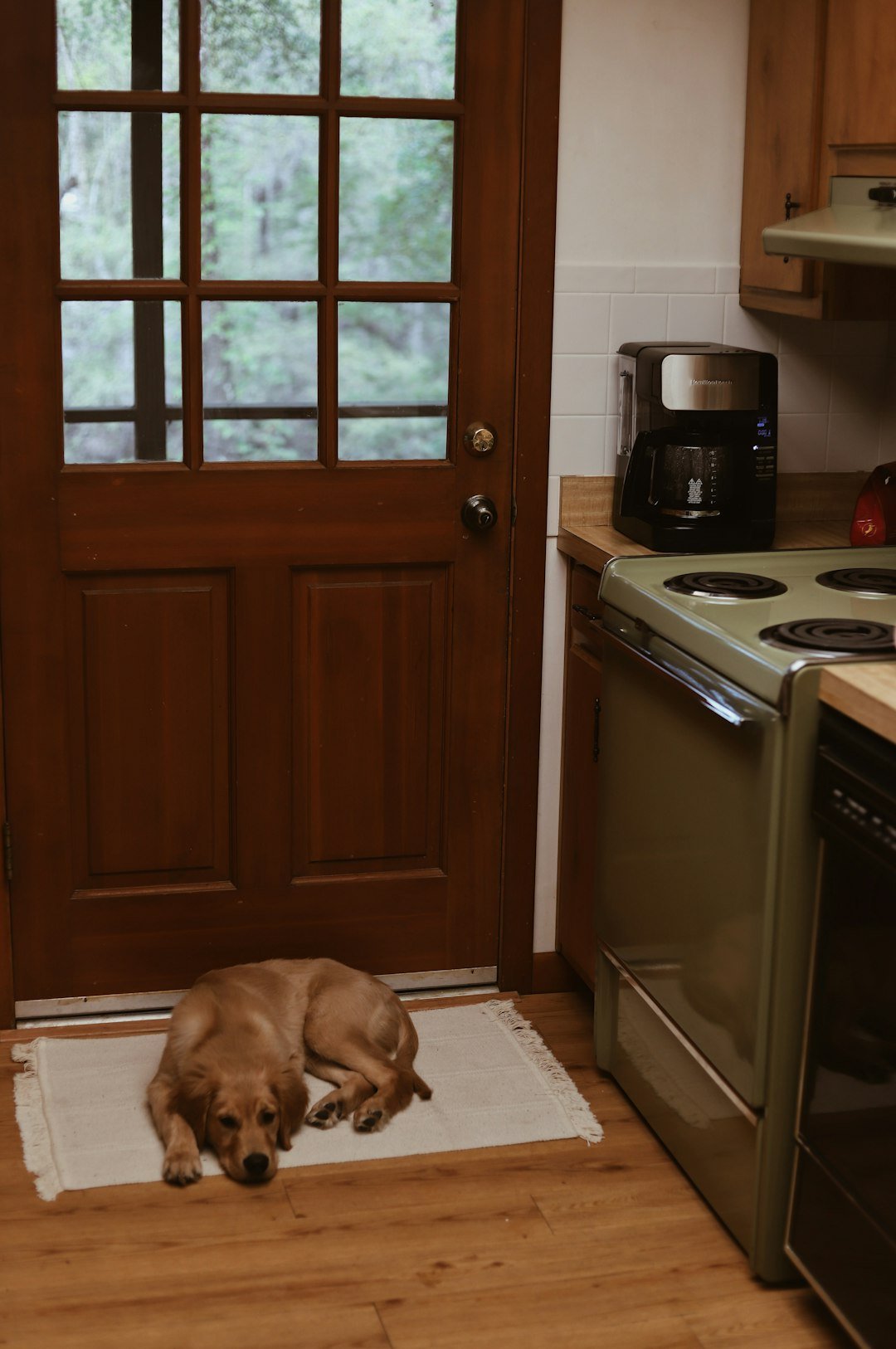
For a very young Golden puppy, a useful first step may simply be being comfortable while you are nearby but not actively interacting. Then you might briefly move out of sight. Later, you may step into another room for a moment, or leave the puppy in their safe space while you move around the house.
Smith strongly prefers reinforcing independence when the puppy chooses it.
If your Golden decides to stay lying down while you walk into another room, that is useful information. They have independently chosen not to follow you.
That is different from putting the puppy into a down-stay and then walking away.
“I would encourage when they choose not to follow. I wouldn’t put them in a down stay while you walk out.”
A down-stay may be a perfectly useful obedience skill, but it does not necessarily teach the emotional lesson we want here: I am comfortable being apart from you.
Look at the puppy, not the clock
One of the biggest mistakes in alone-time training is treating duration as the only measure of success.
Two puppies can both be left for five minutes, but one may be relaxed, chewing and barely bothered while the other spends the whole five minutes pacing and becoming increasingly stressed.
Those are not equivalent experiences.
“Look at the puppy, not the clock.”
Smith is looking for relaxedness: loose body language, the ability to settle, an absence of repetitive pacing and a lack of escalating stress signals.
Quiet is not necessarily calm.
Use a camera if you can
A pet camera can be extremely helpful because it shows you what your puppy is actually doing once you leave.
Listening from outside the door may tell you whether your puppy is barking, but it will not tell you whether they are pacing, scanning the room, repeatedly checking the exit or otherwise struggling quietly.
That information matters because successful home-alone training is about emotional comfort, not simply silence.
Build duration, don’t test it
Home-alone training should not be a staircase where every repetition has to be longer than the previous one.
If your puppy comfortably manages three minutes, the next repetition might be 45 seconds. Then two minutes. Then perhaps four. Then one minute again.
Varying the duration gives the puppy plenty of easy repetitions instead of continually pushing them towards their limit.
Otherwise, every successful repetition simply teaches the puppy that the next one is going to be harder.
The aim is to build a history of separation feeling safe.
Return before things fall apart
Where possible, Smith wants the guardian to return while the puppy is still coping rather than waiting for distress.
That does not mean you need to panic at every sound. Puppies can make noises for all sorts of reasons, including mild frustration. But if you are genuinely unsure whether your puppy is still coping, her advice is simple:
“If you’re unsure, take them out.”
Then make the next repetition easier.
Home-alone training is not a test the puppy has to pass. We are not trying to discover the maximum amount of discomfort they will tolerate. This gradual approach is also consistent with RSPCA guidance on separation-related behaviour, which recommends building time apart very gradually and not leaving a dog so long that they become distressed.
Normal protest is not the same as distress
Not every whimper means a puppy has separation anxiety.
Young puppies may protest briefly when something changes or when access to you is interrupted. But we should not use that fact as an excuse to ignore escalating stress.
If your puppy is becoming increasingly frantic, pacing, unable to settle, vocalising continuously, trying to escape, refusing food they would normally take or showing other signs of significant distress, the exercise is too difficult. Dogs Trust’s guidance on separation anxiety similarly highlights behaviours such as pacing, vocalising and destructive or escape-related behaviour as potential signs that a dog is struggling when left.
Shorten the absence. Make the setup easier. Build again from a point where the puppy can genuinely cope.
Don’t worry about making arrivals artificially boring
You may have heard advice that you should ignore your dog before leaving and for several minutes after you return.
Smith does not see that ritual as necessary if the overall training process is sound.
“It shouldn’t make a difference if the process is done right overall.”
You do not need to turn departures and arrivals into a performance. The important part is the puppy’s underlying expectation that you leaving is safe and that you come back.
Watch for the departure cues your puppy actually cares about
Keys, shoes, bags and coats are often listed as “departure cues” that every dog supposedly needs desensitising to.
Smith prefers a more individual approach.
“We watch puppy, figure out what stresses them and work on it.”
If your puppy starts to become uneasy when you pick up your keys, work on keys. If shoes are irrelevant but the front door is difficult, work on the door.
The puppy is the data.
Food can help, but only if you know it is safe
Chewing and licking can help some puppies relax during early alone-time exercises.
But the first time you test whether your puppy can safely use a chew should not be when you have left the house.
Smith is happy to use appropriate food or chewing activities if the puppy has already proven they are safe with that item while supervised. A food puzzle can be one option for an individual puppy who has already demonstrated that they use it safely and find it genuinely relaxing.
And if a puppy who normally loves food suddenly will not touch it when you leave, pay attention. That can be useful information about how comfortable they really are.
Practising when your puppy is sleepy can help
Early on, it can be sensible to stack the odds in your favour.
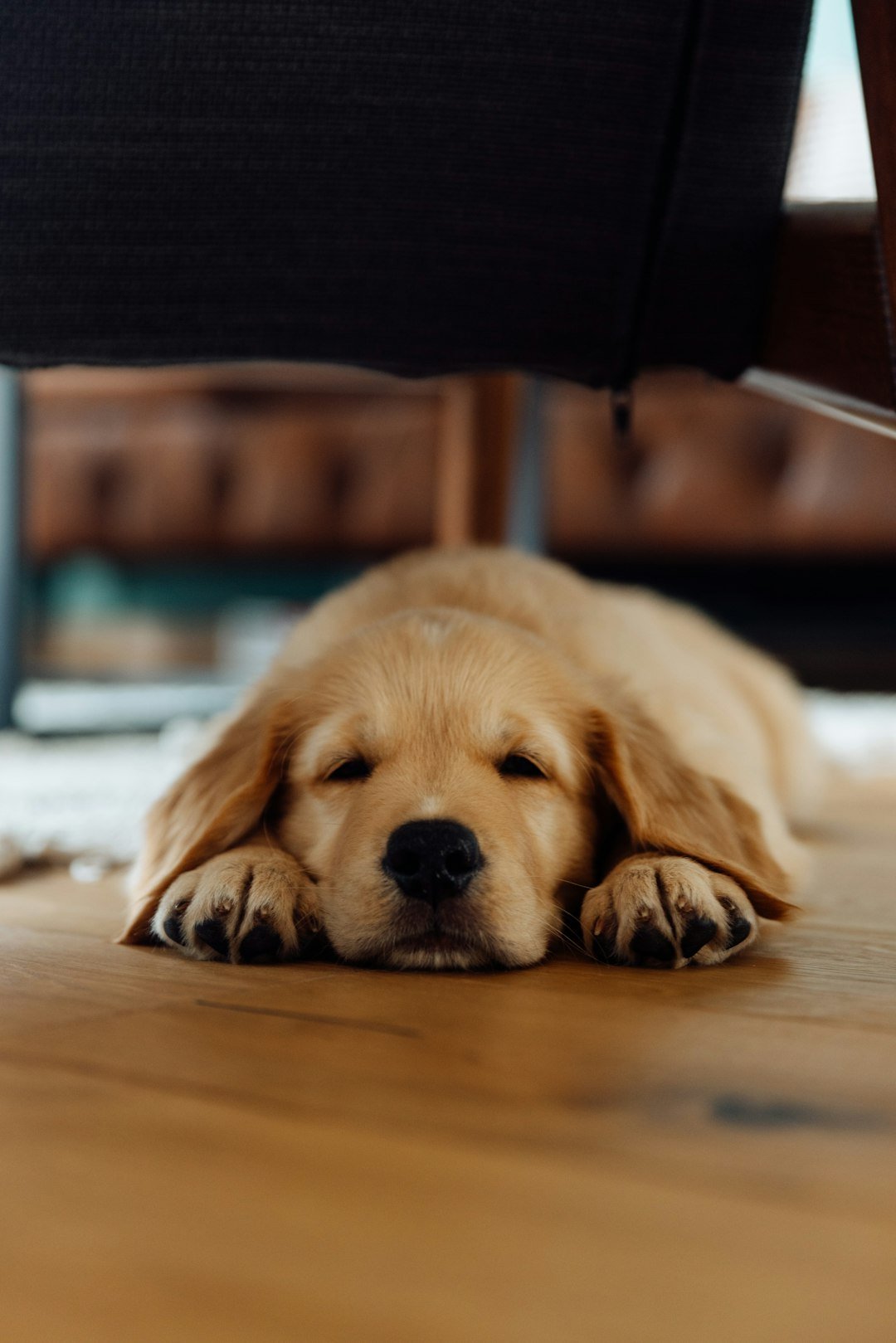
A puppy who has toileted, had an appropriate amount of activity and is naturally sleepy may find a short separation easier than a puppy who is bursting with energy and looking for something to do. If switching off is difficult in general, start with our guide to Golden Retriever puppy sleep and settling.
That can be useful in the beginning.
But over time, we also want evidence that the puppy can be awake and relaxed while alone, not just asleep through every absence.
Meet toileting needs before you leave
Alone-time duration is limited by more than emotional readiness. Your puppy’s physical needs matter too, which is why it helps to have a solid Golden Retriever puppy potty-training routine alongside this work.
Your puppy may be perfectly relaxed for longer than they can physically hold their bladder.
Smith’s rule is simple: whichever limit is shorter takes priority.
“You cannot train a puppy when you aren’t there.”
If your puppy can cope emotionally for two hours but needs to toilet after one, one hour is the current maximum. Equally, a puppy being physically capable of holding their bladder for three hours does not mean they are emotionally ready to be left for three hours.
Don’t suddenly leave a puppy for four hours and call it training
If your puppy is currently comfortable for 15 minutes, leaving them for four hours because you need to go to work is not a training session.
It is an absence far beyond the level they have learned to cope with.
Smith does not advise doing that.
If real life requires absences longer than your puppy can currently manage, the answer is temporary management while training catches up: family, a trusted sitter, a suitable visitor, adjusted work arrangements where possible or another practical setup that prevents the puppy repeatedly being left beyond their current ability.
Training happens during deliberately manageable absences. Management prevents unavoidable life demands from repeatedly undoing that work.
Crates can facilitate alone time, but they are optional
A crate may make early independence easier for some puppies because it creates a predictable safe space with fewer distractions.
But Smith does not consider crates mandatory puppy equipment.
If your puppy is happy in a crate, you can use it. If they are more comfortable in a pen or puppy-proofed room, use that instead.
Closing a distressed puppy in a crate and waiting for them to stop vocalising is not the same thing as teaching them to feel safe alone.
Independence does not mean making your Golden care less about you
Goldens are often highly social dogs, and that is part of what many people love about them.
The aim of home-alone training is not to suppress that sociability or make the puppy less attached to their guardian.
It is to widen their behavioural options.
Your puppy can love being with you and also learn that you leaving the room is not a crisis. They can enjoy following you sometimes and also choose to stay put. They can be affectionate and still develop confidence away from you.
That independence is not distance in the relationship. It is another form of security.
What should good home-alone progress look like?
Not a stopwatch record.
Good progress looks like a puppy who remains relaxed while the duration gradually changes. A puppy who can settle. A puppy who does not need to follow every movement you make. A puppy who can be awake without becoming increasingly distressed.
Some repetitions will be shorter than yesterday’s. Some days will be easier than others.
That is fine.
Home-alone training works best when you stop trying to prove how long your puppy can cope and start building a strong history of separation being safe.
Build home-alone time. Don’t test it.