
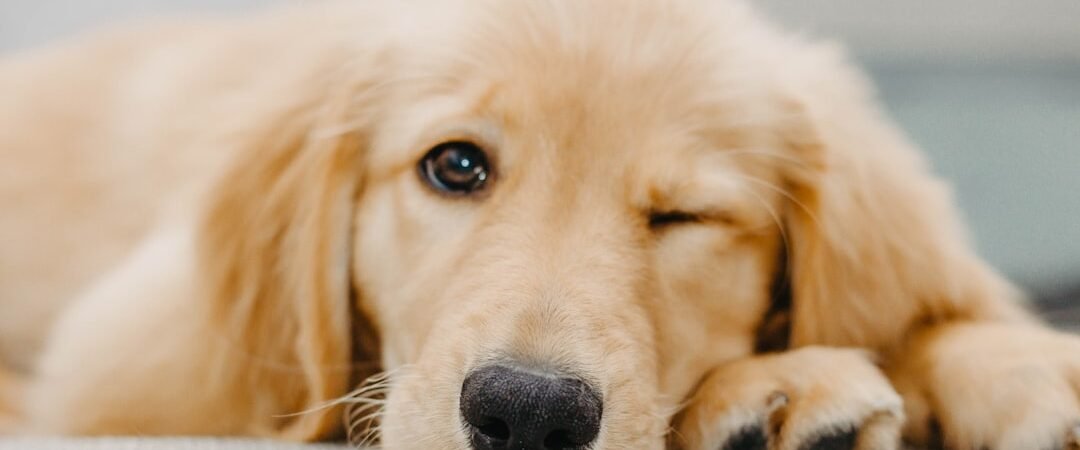
Golden Retriever puppies can be extremely convincing when they want you to believe they need more entertainment.
They’re racing around the room, biting your clothes, grabbing the leash, pestering everybody, escalating play and apparently still have enough energy to launch themselves at the furniture. Surely the answer is another walk?
Not necessarily.
Sometimes the puppy who looks as though they have endless energy is actually exhausted.
Dog trainer and behaviour consultant Ali Smith says one of the biggest clues is an inability to regulate.
“They cannot switch off. Everything becomes overly intense.”
And this is where puppy guardians can accidentally make things worse. They see a wild puppy, assume that puppy needs tiring out, add more exercise, play, training or enrichment — and end up with an even more overtired puppy who is now even less capable of settling.
As Smith puts it: “A tired dog isn’t always a good dog.”
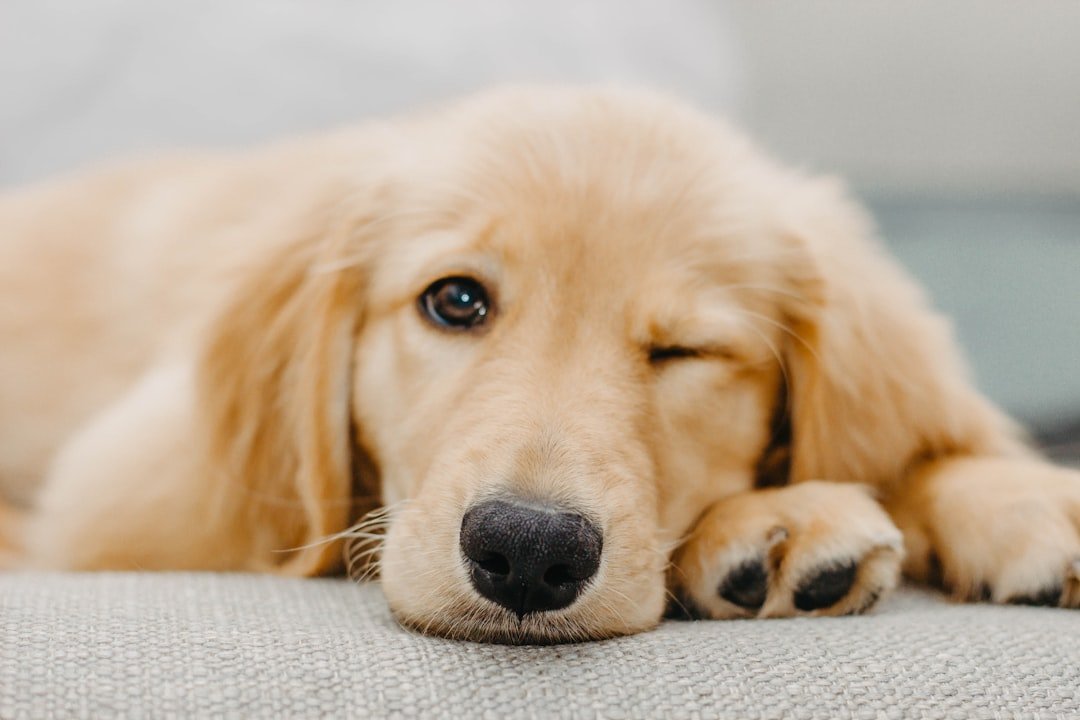
How much sleep does a Golden Retriever puppy need?
You’ll commonly see figures of around 18–20 hours of sleep in a 24-hour period quoted for young puppies. The American Kennel Club notes that puppies may need up to 18–20 hours of sleep, while PetMD gives a broader range of around 12–20 hours depending on age, breed and activity. That makes the number a useful ballpark, but it shouldn’t become another rigid puppy quota.
Individual puppies vary. Their age, activity, development, environment and what they’ve experienced that day can all affect how much rest they need.
Smith’s view is that some puppies need more than the commonly quoted amount — and very few genuinely need substantially less.
So rather than watching the clock and deciding your puppy has officially completed their sleep allowance, look at the puppy in front of you. If you do want more objective data, a sleep tracker can be useful for spotting patterns rather than guessing; Ali has used Fi’s sleep tracking extensively and shares what she found in her Fi Series 3 GPS dog collar review on ReBarkable.
If they’re regularly becoming frantic, intense and incapable of switching off, more sleep may be one of the first things worth addressing.
What does an overtired Golden Retriever puppy look like?
Overtired puppies don’t necessarily look sleepy.
In fact, they can look spectacularly energetic.
Common signs can include:
- increasingly intense biting or mouthing
- grabbing clothes or the leash
- frantic zoomies
- barking and pestering
- play becoming increasingly wild
- difficulty listening or responding to familiar cues
- moving rapidly from one activity to another
- being unable to disengage and settle
The important part isn’t one individual behaviour. Puppies bite, run and play for plenty of reasons.
It’s the overall loss of regulation and increasing intensity that Smith pays attention to.
If your Golden puppy seems to become a tiny menace at roughly the same point every evening, don’t immediately assume you’ve failed to exercise them enough. Overtiredness can also make Golden Retriever puppy biting look dramatically worse.
Does my puppy need more exercise or more sleep?
This can be difficult to judge when you’re looking at an already dysregulated puppy.
Smith’s approach is simple: fix the sleep first.
If a puppy isn’t getting enough rest, adding more and more physical exercise or stimulation makes it difficult to tell what their actual activity needs are.
Give them appropriate opportunities to sleep and recover, then reassess the puppy you’re dealing with.
If their regulation improves dramatically once they’re well rested, you’ve learned something useful.
Don’t try to exercise an overtired puppy into submission
It’s an understandable instinct. The puppy is going wild at 8pm, so you take them for another walk in the hope they’ll finally come home and collapse.
But if they’re already overtired, you may simply add more stimulation to a nervous system that’s struggling to come down.
“Don’t do it. A tired dog isn’t always a good dog.”
The often-used guideline of roughly five minutes of formal exercise per month of age can be a reasonable general indicator, according to Smith, but it isn’t a stopwatch rule and it doesn’t mean every minute should be spent trying to exhaust your puppy.
A gentle, sniffy outing and frantic high-intensity activity can have very different effects on a puppy even if both last exactly the same amount of time. If walks themselves are becoming frantic, our Golden Retriever puppy leash-training guide covers building calmer lead skills without punishment.
Do Golden Retriever puppies need scheduled naps?
For many young puppies, scheduled or deliberately facilitated naps can be extremely useful.
But the eventual goal isn’t a dog who can only sleep when a human decides it’s nap time.
Smith sees one skill as leading into the other: you can’t expect a puppy to self-regulate before you’ve helped teach them how.
Early on, guardians may need to provide much of the structure. That means creating genuine opportunities for sleep rather than expecting an excited young puppy to recognise their own tiredness and make a sensible decision about it.
As the puppy develops, you can begin reinforcing the moments when they choose relaxation for themselves.
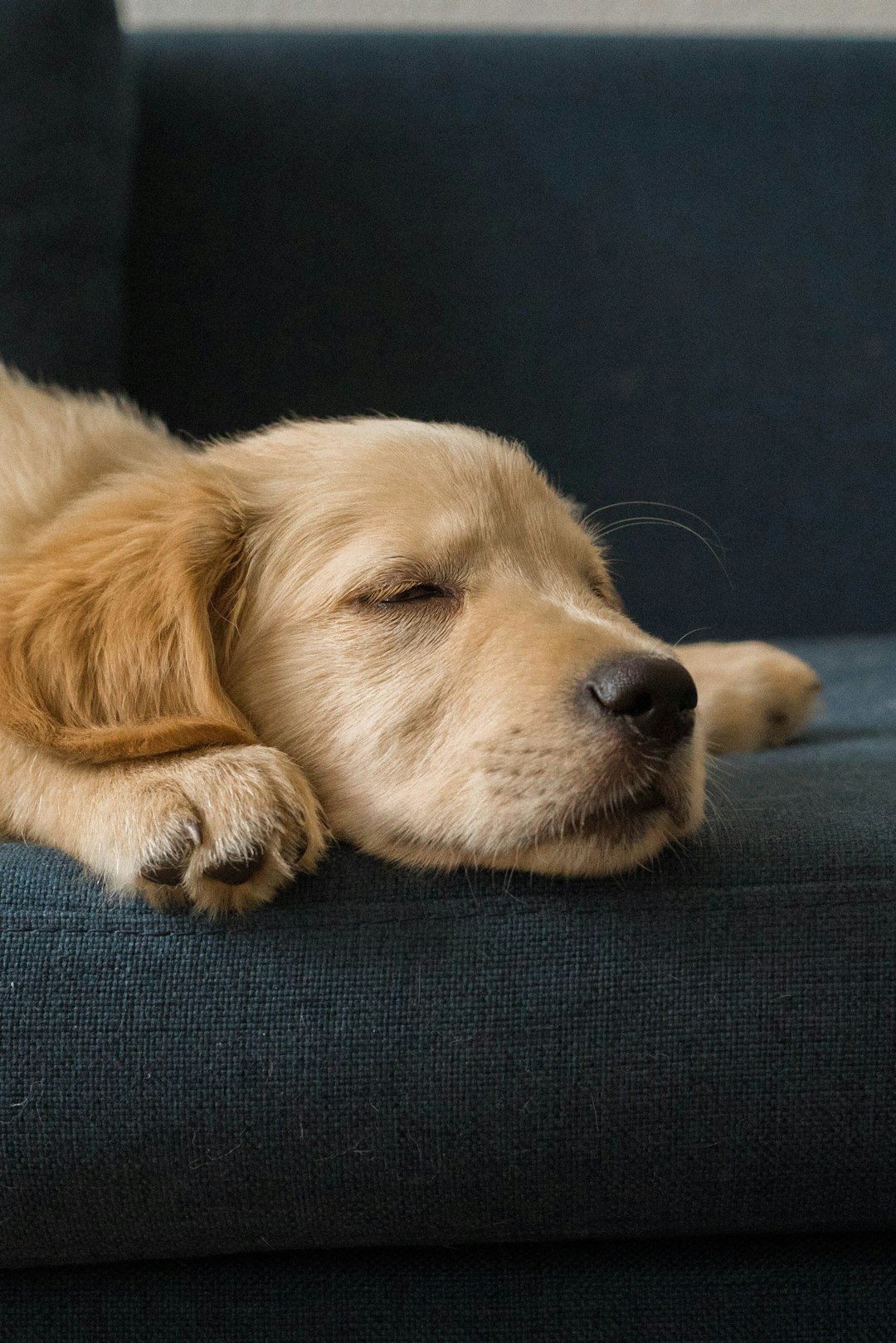
How do you teach a Golden Retriever puppy to settle?
One of the simplest things Smith recommends is rewarding relaxation when the puppy chooses it.
Notice the small moments.
Your puppy lies down instead of following the action. Their body softens. They disengage. They choose to remain resting while something happens elsewhere.
Those are choices worth calmly reinforcing.
The reward itself shouldn’t turn relaxation into another high-arousal activity. Quiet praise or a calmly delivered reward can acknowledge the behaviour without throwing a party because your puppy finally lay down.
Over time, the aim is to develop a dog who doesn’t need constant instruction to switch off.
What if my Golden puppy is exhausted but refuses to sleep?
Don’t turn sleep into a battle.
Instead, Smith uses activities that can help facilitate relaxation, particularly:
- sniffing
- licking
- chewing
These can provide something appropriate for the puppy to do while their arousal comes down, rather than adding another round of exciting interaction.
The environment matters too, but there isn’t one setup that suits every puppy.
Some will happily sleep through ordinary household noise and movement. Others are interested in absolutely everything and initially need a quieter environment, fewer visual distractions or some separation from whatever is keeping them awake.
Smith’s answer to how quiet, dark or controlled the environment should be is simply: it depends on the dog.
Start with the help your individual puppy needs, then gradually give them opportunities to settle in normal life too.
Your puppy doesn’t need entertaining every minute they’re awake
Modern puppy advice can accidentally make guardians feel responsible for providing a constant programme of walks, training, play, socialisation and enrichment. Our complete Golden Retriever puppy training guide looks at how those different skills fit together without turning every waking minute into a training session.
For an excitable Golden Retriever puppy, that can become part of the problem.
Learning how to occupy themselves is a skill too — and, as Smith points out, teaching independence is still teaching. When you’re ready to build that into actual separation, our Golden Retriever puppy home-alone training guide starts with tiny absences and progresses according to the puppy rather than the clock.
She makes a useful distinction between independent occupation and play.
For independent, lower-arousal activities, she favours sniffing, licking and chewing.
Play, meanwhile, is interaction.
That doesn’t make play bad. Puppies absolutely should play. But if the aim is to teach your Golden that they don’t require your involvement every waking second, constantly initiating another game isn’t practising that skill.
Eventually, we also want the puppy to be capable of doing very little at all. Calm doesn’t always need an enrichment product attached to it.
Can a crate help a Golden Retriever puppy sleep?
Yes. But it isn’t compulsory.
Smith views a crate as something that can facilitate rest for an individual puppy rather than equipment every puppy must use.
For some puppies, a positively introduced crate reduces distractions and makes switching off considerably easier.
For others, a different sleeping arrangement works perfectly well.
The important thing is not to confuse the tool with the skill. Ultimately, we want the puppy to develop the ability to settle and regulate outside a crate too.
And if a puppy finds the crate distressing, simply shutting them inside because “puppies need naps” isn’t teaching relaxation.
Should you wake a sleeping Golden Retriever puppy?
Usually, Smith wouldn’t.
If a puppy is sleeping well, let them sleep unless there’s a genuine reason to interrupt them.
Real life sometimes provides one. You may need to leave the house, for example. Medication may sometimes need to be given on a particular schedule, depending on the medication and veterinary instructions.
Toilet training can also be a reason, particularly overnight.
If your young puppy won’t reliably wake or alert you when they need to toilet, proactively waking them for an appropriate toilet opportunity can make sense. That need should change as bladder control and communication develop.
Sleep, settling and independence are different skills
It’s useful not to bundle everything under the word “calm.”
A puppy needs to learn how to get enough sleep.
They also need to learn how to settle while awake.
And they need opportunities to learn how to occupy themselves independently without their guardian constantly providing entertainment.
Those skills overlap, but they aren’t identical.
Initially, you’ll probably do a lot of the work to create the conditions in which those behaviours are possible. Gradually, your puppy should begin making more of those choices independently.
What should I do when my Golden puppy gets wild in the evening?
Before reaching automatically for the leash, look at the whole day.
Has your puppy had opportunities to sleep properly? Have they been busy for hours? Are you seeing increasing intensity rather than purposeful activity? Can they disengage from play, or do they seem incapable of stopping?
If their needs have been met and the puppy looks dysregulated, make the next part of the evening less exciting, not more.
Give them an opportunity to sniff, lick or chew. A few calmly delivered small training treats can also be useful when you’re reinforcing those quiet choices without turning the moment into another exciting event. Reduce stimulation if that helps your particular puppy. Facilitate rest.
Then let them sleep.
The aim isn’t to tire your Golden Retriever puppy out
Golden Retrievers are enthusiastic dogs, and puppyhood can amplify that enthusiasm considerably.
But raising a puppy isn’t a daily competition to see whether you can finally exhaust them.
A puppy who appears to have endless energy may actually be telling you they don’t yet know how to regulate it.
At first, you help them.
You create opportunities to sleep. You reinforce the moments when they choose relaxation. You teach them how to occupy themselves without needing constant interaction. And gradually, you hand more of that regulation over to them.
Because the goal isn’t simply a tired Golden Retriever.
It’s a Golden Retriever who knows how to switch off.