This article contains affiliate links. If you buy through one of these links, we may earn a commission at no extra cost to you. Recommendations are based on equipment and resources dog trainer Ali Smith genuinely uses and recommends.
Bringing home a Golden Retriever puppy can make you feel as though you need to buy half a pet store before they arrive. You don’t.
A good puppy setup is less about owning everything and more about having the right tools for sleep, management, toileting, walking, chewing, play, enrichment and training. Buy the essentials first, then let the puppy you actually have tell you what else is useful.
If I were bringing home a Golden puppy tomorrow, I would organise the essentials around the first few weeks rather than filling cupboards with equipment I might never use. A safe resting area, straightforward toileting supplies, suitable chewing options and properly fitted walking gear make day-to-day life much easier.
I would also plan where the puppy will sleep, how to prevent unsupervised access to unsafe areas, and who will take them outside during the day. Equipment can support those routines, but it cannot replace them. This checklist prioritises the items that solve a real problem before you spend money on the extras.
Golden Retriever puppy shopping checklist
- Crate with divider
- Crate pad or simple bedding
- Playpen
- Pet gates
- Enzyme cleaner
- Y-shaped harness
- Regular leash
- Long line
- Food and water bowls
- Kong
- Quality stuffed toy
- Appropriately sized ball
- A small selection of suitable chews
- Training treats
- Grooming tools
- A realistic puppy schedule
That is the useful version. You can absolutely buy a matching blanket embroidered with their name if it makes you happy, but your puppy will not care nearly as much as they care about being able to toilet when they need to.
1. Crate: useful, but don’t make it the whole setup
For a Golden Retriever puppy, I generally like an adult-sized crate with a divider so the usable space can grow with them. For many Goldens that means starting around a 42-inch adult crate, while still checking the individual dog and manufacturer’s dimensions.
Crates are useful management tools, but they are very easily misused. I do not want the crate becoming puppy storage whenever normal puppy behaviour becomes inconvenient.
Our Golden Retriever crate-size guide covers sizing, dividers, crate time and how I actually use one.
2. Crate pad or bedding
This is the crate pad I recommend.
I would not get too emotionally invested in beautiful puppy bedding on day one. Some puppies sleep beautifully on it. Others pee on it, chew it, dig at it or decide the label must be surgically removed.
Start practical. Once you know how your puppy behaves around bedding, you can upgrade the interior-design situation.
3. Playpen
A playpen is one of my favourite puppy-management purchases.
A pen gives a puppy more freedom than a crate while still stopping them wandering off to chew a cable, investigate the trash or quietly toilet behind the sofa.
I like having several management options rather than relying on one. The puppy can sleep in a crate, spend awake independent time in a pen, and have supervised access to larger areas of the home.
4. Pet gates
This is my recommended pet gate.
Gates are underrated. They let you make the environment easier without constantly correcting the puppy for making completely predictable puppy choices.
Block stairs, protect rooms that are not puppy-proofed, or create a larger safe zone when a playpen feels too restrictive. Good management gives you fewer behaviours to fix later.
5. Enzyme cleaner
Buy enzyme cleaner before you need enzyme cleaner.
Even with excellent toilet training, you brought home a baby animal. Accidents happen. An enzymatic cleaner is designed to deal with the organic residue rather than simply making the area smell lemony to humans.
The bigger toilet-training strategy is frequent appropriate opportunities, supervision and learning your puppy’s patterns. Our Golden Retriever potty-training guide walks through that process, and my Toilet Training guide gives you a structured resource to follow.
6. A good Y-shaped harness
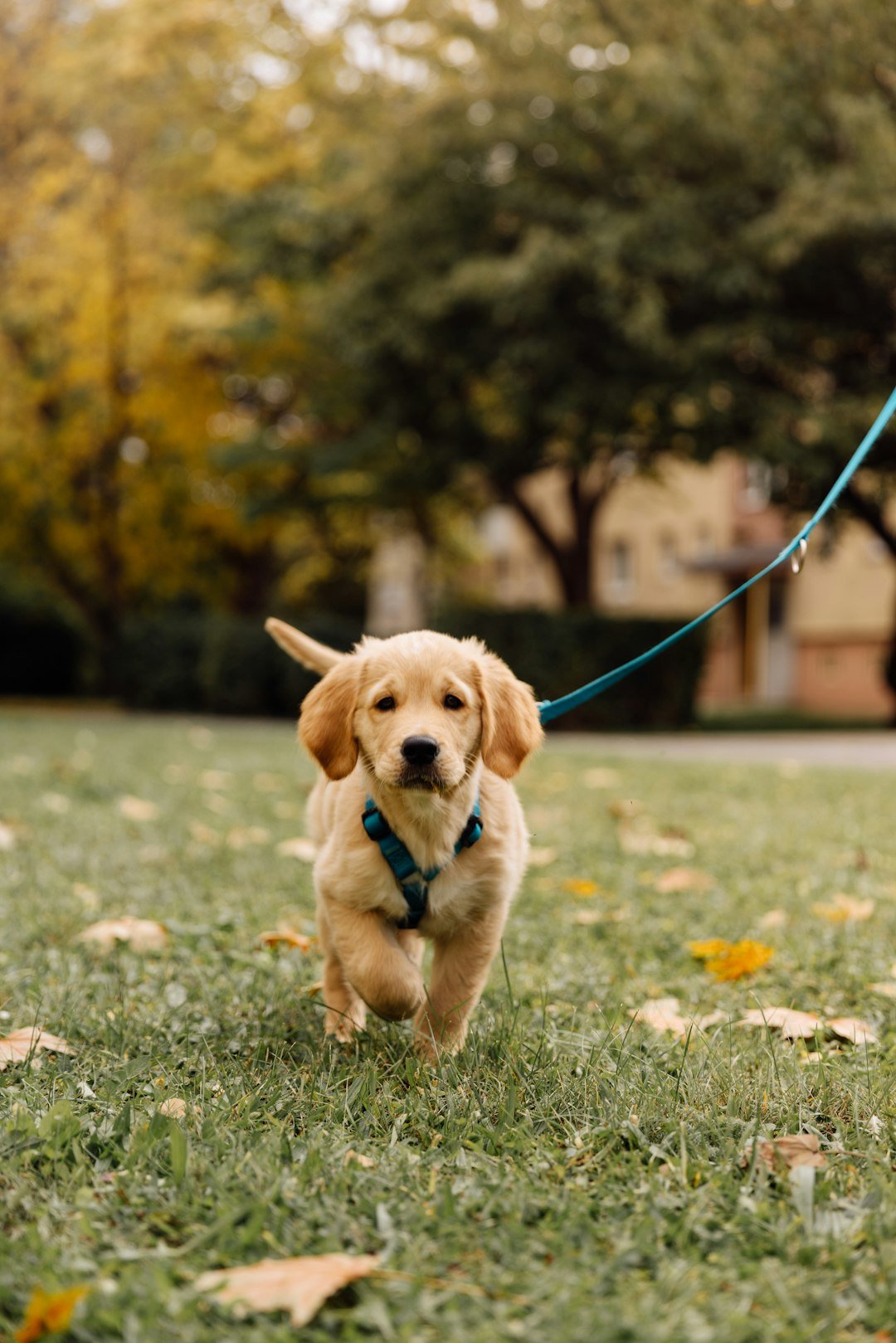
I prefer Y-shaped harnesses that give the front end room to move rather than putting a horizontal strap across the shoulders.
For Goldens, my top adult-quality choices are the Haqihana H Harness and Ruffwear Front Range. With a rapidly growing puppy, I am comfortable being more pragmatic about price because they can grow through sizes quickly; I would still prioritise sensible geometry and fit.
See my best harnesses for Golden Retrievers for the full reasoning, and my harness and long-line equipment list for current recommendations.
7. A regular leash
This is my recommended everyday leash.
You do not need a leash that promises to stop pulling. A leash is equipment; loose-leash walking is a skill. Pick something comfortable to hold, appropriate for the dog’s size and suitable for the environment you are using it in.
As your puppy starts exploring more of the world, our Golden Retriever leash-training guide covers the training side.
8. A long line
A long line is one of my favourite ways to give a puppy more freedom while recall is still very much under construction.
It lets them sniff, explore and practise choosing to come back without requiring the dangerous leap from six-foot leash to complete freedom. Use it attached to an appropriate harness rather than relying on it as a correction tool.
You can find my current long-line and harness recommendations here.
9. Food and water bowls
This does not need to become a research project. You need appropriately sized, easy-to-clean bowls that work in your home.
I tend to favour practical over decorative with puppy equipment because anything at puppy height may eventually be investigated with teeth.
10. A Kong
A Kong earns its place in my essential puppy kit.
It can deliver food, encourage licking and problem-solving, help a puppy settle, and give you a useful independent activity. Just don’t make the first one ridiculously difficult.
Start easy enough that the puppy succeeds, then build complexity. My How to Kong guide shows you how I do that.
11. A quality stuffed toy
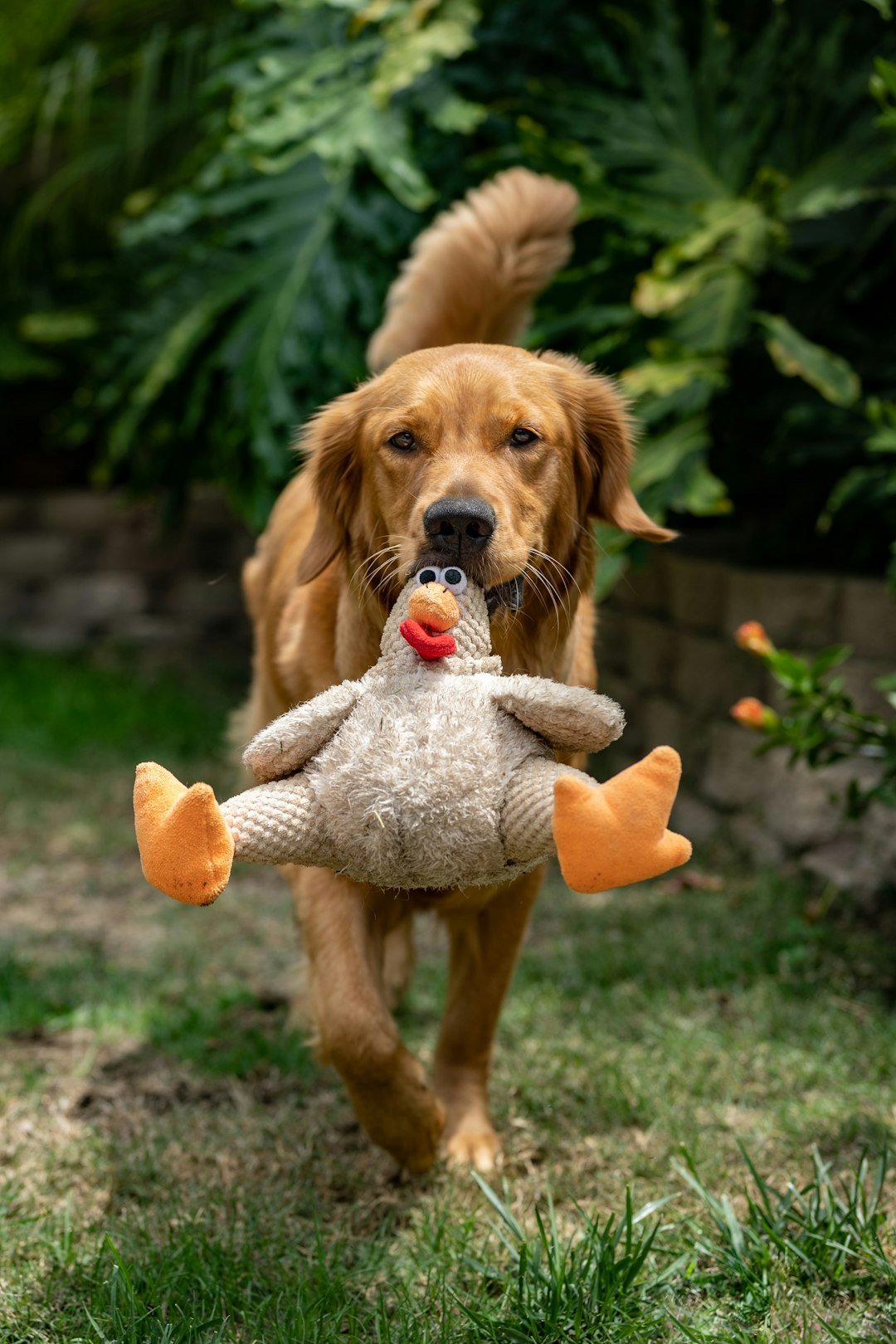
Fluff & Tuff is by far my favourite stuffed-toy choice.
Retrievers like to retrieve, and many Golden puppies absolutely love having something soft to carry. I would rather give them an appropriate stuffie than spend all day asking them to put down every soft household object they find.
Soft does not mean indestructible, so supervise until you know whether your puppy is a gentle carrier or a tiny toy surgeon.
12. An appropriately sized ball
The large Chuckit ball is my Golden-specific ball recommendation.
As your puppy grows into it, a good ball gives you a straightforward retrieve game. I prefer short, interactive retrieving sessions rather than endlessly launching balls to exhaust a young dog.
Our best toys for Golden Retriever puppies explains the toy setup in more detail.
13. A few suitable chews
You need chewing outlets, but you do not need every chew in the aisle.
Options I use include yak cheese, bully sticks, coffee root chews, pig ears and buffalo horn.
Choose according to the puppy’s size and chewing style, supervise appropriately, and remove anything that becomes small enough to swallow or starts breaking in a way you are not comfortable with.
14. Training treats
You will use food a lot while teaching a puppy, but that does not mean every repetition needs a giant commercial treat.
Use part of their normal food where it works, alongside small higher-value options when the environment or task warrants it. Tiny pieces are usually enough. Training is about reinforcement, not filling the puppy up by lunchtime.
15. Basic grooming tools
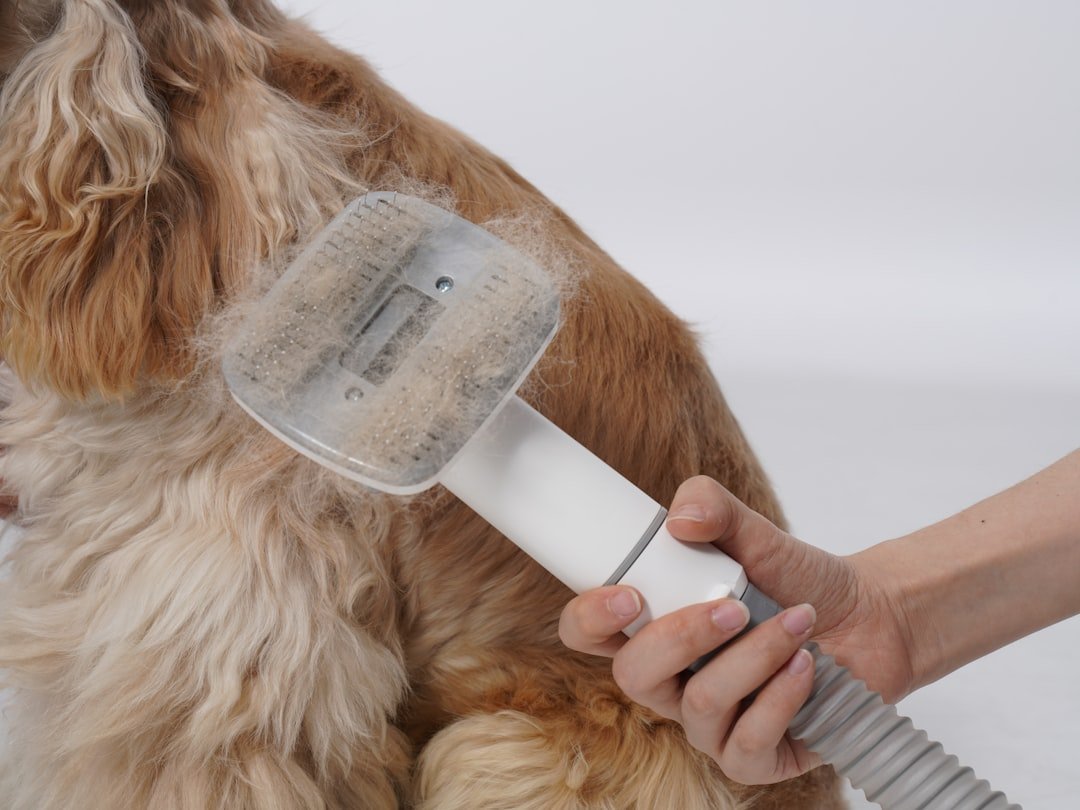
A Golden Retriever is going to be groomed regularly for years, so grooming equipment is one place where I think investing in professional-quality tools makes sense.
My core Golden kit is a professional-quality slicker brush, Greyhound comb and undercoat rake. I also use claw clippers and a dog dryer.
See our best brushes for Golden Retrievers for what each tool actually does.
16. A puppy schedule that works for the puppy
This is not something you put in the Amazon cart, but it is more useful than a lot of things you could.
Young puppies need frequent toileting opportunities, a lot of sleep, food, short training opportunities, socialisation and manageable amounts of activity. A realistic routine helps you anticipate those needs instead of spending the day reacting to an overtired, bitey puppy.
My Puppy Schedule Builder helps you build the day around the puppy you actually have rather than following an arbitrary timetable.
What I would not rush to buy
I would not buy an enormous wardrobe, piles of toys, multiple expensive puppy-sized harnesses, a complicated collection of puzzle feeders or every grooming product marketed for Golden Retrievers before the puppy arrives.
Start with the things that solve predictable needs. Add to them when your individual puppy gives you a reason.
The same applies to training equipment that promises to stop behaviour for you. No harness teaches loose-leash walking. No crate teaches a puppy to be alone. No chew fixes puppy biting by itself. Equipment makes good training and management easier; it does not replace them.
What should you buy before bringing your Golden Retriever puppy home?
If I were stripping the list down to the things I genuinely wanted in the house on day one, I would prioritise:
- Crate, pen and/or gates for safe management
- Enzyme cleaner
- Food and water bowls
- Harness and leash
- Kong
- One good stuffie
- Suitable chews
- Simple bedding
- Basic grooming tools
- A plan for toileting, sleep and the first few days
The long line and broader toy collection can be added as the puppy begins exploring more. The important thing is that your home is ready to meet the puppy’s needs, not that every possible product has arrived.
Don’t forget the non-shopping part
The best puppy setup still depends on what you do with it. Socialisation is not simply taking a puppy everywhere. Training is not waiting for bad habits and then correcting them. Management is not shutting a puppy away whenever they become difficult.
Our Golden Retriever puppy training guide gives you the broader foundation.
If you want the training resources together, my Puppy Bundle is the best-value starting point. You can also get the dedicated Socialisation eBook and Core Training guide separately.
A practical consideration for Golden Retriever guardians
The most useful puppy shopping budget includes things you will use every day, not every gadget marketed to new guardians. Before spending on extras, make sure you have appropriately fitted walking equipment, safe sleeping and management spaces, cleaning supplies and a plan for feeding, toileting and rest. A puppy routine does not need to be rigid, but it should accommodate plenty of sleep and predictable chances to succeed. For related guidance, see Rebarkable’s puppy feeding calculator.
The bottom line
Your Golden Retriever puppy needs less stuff than the internet will try to sell you.
Spend your money on good management equipment, a comfortable walking setup, a handful of toys and chews that let a retriever retrieve and a puppy chew, practical grooming tools, and resources that help you understand what to do when the puppy actually arrives.
Then watch your puppy. The best shopping list is the one that changes according to the individual dog rather than accumulating products for problems you do not have.