
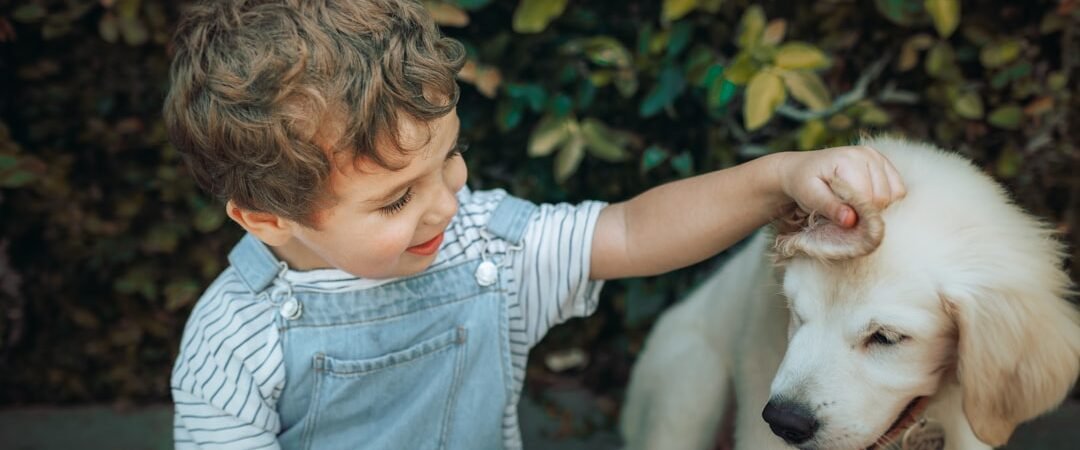
Golden Retrievers have one of the strongest “perfect family dog” reputations of any breed. Friendly, trainable, affectionate, good with children — what could possibly go wrong?
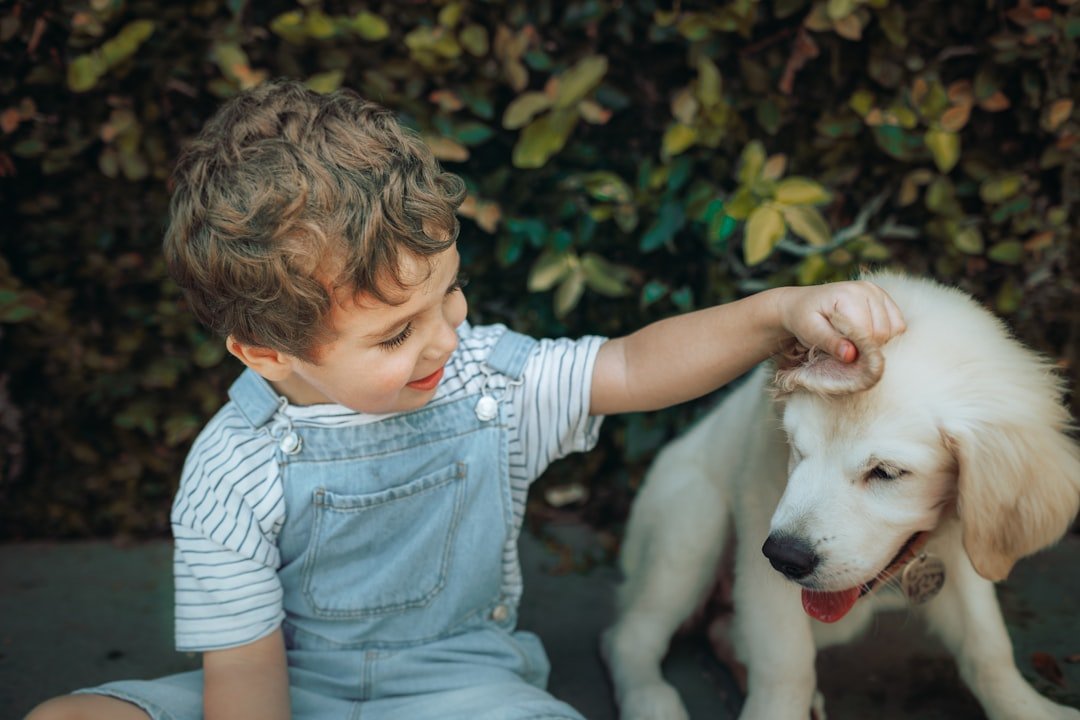
Quite a lot, actually, if the family chose the picture of life with a Golden rather than the dog itself.
Professional dog trainer and behavior consultant Ali Smith loves the breed, but she is much less interested in selling families the postcard version. Young Goldens can be chaos. They are large, excitable, mouthy, sociable dogs who can have remarkably little awareness of where their body ends and your toddler begins.
That does not make them bad family dogs. Goldens can be phenomenal family companions. It means “good with families” is not the same as “effortless to live with.”
Writer Sophie Bennett looks at the part people tend to leave out.
Are Golden Retrievers good family dogs?
Yes, for the right family.
Golden Retrievers have many qualities that can make them excellent family dogs. They tend to be social, people-oriented, highly trainable and enthusiastic about participating in family life.
But those same traits have another side.
A highly social dog may desperately want to greet every visitor. An enthusiastic dog can bowl into children. A retriever explores and interacts with the world using their mouth. A clever, trainable dog still needs somebody to actually do the training.
Ali thinks prospective owners should ask themselves a more useful question than “Are Goldens good family dogs?”
Do you want the dog for what the dog is, or do you want the picture of the family with the dog?
If you genuinely like what Goldens are, including the inconvenient bits, the answer may very well be yes.
Golden Retrievers and children: the reality
Goldens are frequently recommended for homes with children because they have a reputation for friendly, tolerant temperaments.
That reputation should not make parents complacent.
“Goldens can be chaos,” Ali says. “They’re very excitable and have minimal sense of space or spatial awareness. So toddlers will be falling over a lot with younger Goldens.”
A dog does not need to be aggressive to hurt or frighten a small child. A happy 60-pound adolescent charging through the living room, swinging around with a toy or launching themselves enthusiastically toward somebody they love can flatten a toddler without intending any harm whatsoever.
That means supervision, management and training matter even with an exceptionally friendly dog.
Are Golden Retrievers gentle with toddlers?
They can be. They can also be enormous furry wrecking balls.
Temperament matters, but so do age and arousal. A mature Golden who has learned how to behave around children may feel very different from a six-month-old puppy whose legs, teeth and enthusiasm have all grown faster than their self-control.
Parents should plan for physical management rather than assuming “good with children” means the puppy will instinctively know how to behave around a two-year-old.
Baby gates, separation during high-energy periods, safe rest areas and active adult supervision can all be perfectly normal parts of raising a puppy alongside young children.
Children also need rules. Dogs should be allowed to sleep, eat and move away without being followed, climbed on, hugged or treated as entertainment.
Golden Retriever puppies are mouthy — because they are retrievers
This catches families by surprise even though the clue is literally in the breed’s name.
Golden Retrievers were bred to retrieve. Picking things up and carrying them is deeply relevant to what humans selected them to do.
“It’s fundamental,” Ali says. “It’s what they were actually bred for. They’re retrievers. They find things in their mouth to be very satisfying biologically speaking, so that will culminate in extra mouthiness.”
In puppyhood, that can mean hands, sleeves, children’s clothes, toys, shoes and whatever else happens to be available.
Mouthiness is not the same thing as aggression, but it can still hurt — especially when puppy teeth meet children’s skin.
If you are already dealing with it, our Golden Retriever puppy biting guide explains how to work through it without turning normal puppy behavior into a battle.
Will a Golden Retriever calm down around the children eventually?
Usually, maturity helps enormously.
Ali generally sees Goldens settling into themselves somewhere between three and five years old, although the individual dog and their training make a substantial difference.
That is worth absorbing before buying an eight-week-old puppy.
You are not buying the calm adult Golden you met at somebody else’s house. You are buying the puppy and adolescent stages required to get there.
Good training can make those years far easier. It can teach a young Golden not to jump on children, how to settle when family life is happening around them, how to leave tempting objects alone and how to move through the world without greeting everybody at full speed.
But maturity is not something you can rush.
“It’s okay, he’s friendly” is not good enough
Goldens are often extremely sociable dogs, and owners can become a little too confident that everybody else will appreciate that sociability.
Ali sees a particular trap in the breed’s friendly reputation: because the Golden is okay with the interaction, the owner assumes everybody else must be okay too.
They are not.
A child may be scared of dogs. A visitor may simply not want muddy paws on their clothes. Another dog may dislike being approached. A cat may quite reasonably object to being pursued by a cheerful retriever.
Friendliness does not entitle a dog to somebody else’s space.
There is also a safety issue for the Golden. Allowing an enthusiastic dog to approach every animal or person because “he’s friendly” can put that dog in danger when they eventually approach the wrong individual.
Teaching a social Golden that they do not get to greet everybody is part of responsible ownership, not an attempt to make them less friendly.
Are Golden Retrievers good when visitors come over?
They can be wonderful with visitors. They can also make opening the front door feel like hosting a small sporting event.
Excited greeting, jumping, grabbing something to carry, weaving through legs and trying to personally welcome every human who enters the house are all very plausible Golden behavior.
If your ideal family dog calmly watches Grandma walk through the door, you may need to train that dog rather than assume the breed description includes it.
Management helps while the skill develops: gates, a leash, a mat or settling area, and teaching the dog that visitors do not automatically mean instant access.
Are Golden Retrievers good with other dogs?
Many are highly social with other dogs, but “Golden Retriever” is not a guarantee of universal dog friendliness.
Individual temperament, genetics, experiences and socialisation all matter. And even a genuinely dog-social Golden still needs to learn not to drag their owner across the road every time another dog appears.
This is one reason Ali dislikes the idea that socialisation means making a puppy greet everybody. Good socialisation includes learning to observe dogs, people and the world without needing to interact with all of it.
Our Golden Retriever puppy socialisation guide covers that in detail.
Are Golden Retrievers good with cats?
They can live very successfully with cats, but do not rely on the breed’s friendly image and skip the introduction process.
Goldens are retrievers and can have meaningful prey and chase drive. That may be especially relevant in some field-bred lines, where working traits have been selected more intensely.
A dog can be socially friendly and still find a running cat extremely exciting.
If your household includes cats or other small animals, talk honestly with breeders about drive and previous dogs from their lines. Our field vs show Golden Retriever guide explains why breeding direction can matter.
Do Golden Retrievers need loads of exercise?
They need appropriate physical exercise and opportunities to use their brain, but Ali cautions against treating exhaustion as the goal.
A good dog is not necessarily a tired dog, and a tired dog is not necessarily a good dog.
Families can accidentally create an overtired, wired Golden by assuming every bout of chaotic behavior means the dog needs more exercise.
Young dogs also need sleep, decompression and the ability to settle. Training calmness is part of raising a family dog.
For puppies, our Golden Retriever puppy sleep and settling guide is a useful place to start.
Can Golden Retrievers be left alone while the family is at work or school?
They can learn to spend appropriate periods alone, but a highly social breed should not be expected to arrive knowing how.
Home-alone skills are something to build deliberately and gradually, particularly with a puppy.
A family schedule can make this harder than expected. School runs, commuting, children’s activities and work may leave less time for gradual alone-time training than the family imagined when planning the puppy.
Our Golden Retriever puppy home-alone guide walks through the process.
Are Golden Retrievers easy family dogs to train?
They are generally very trainable. That does not mean training happens by osmosis.
Ali often sees new owners interpret adolescent excitement or inconsistency as the dog being less intelligent than expected. In reality, the human side of the training equation matters enormously.
New trainers can struggle with timing, reinforcement, consistency and knowing when they have increased difficulty too quickly. Persistence and repetition work.
Goldens are often forgiving dogs to learn with, but they still require somebody to teach the skills the household needs.
Our Golden Retriever puppy training pillar brings the core puppy skills together.
What families tend to underestimate about Golden Retrievers
- The physicality. They become large dogs while their manners are still very much under construction.
- The mouthiness. Retrieving and carrying are not quirky extras; they are relevant to the breed’s behavioral heritage.
- The excitement. Friendly does not automatically mean calm.
- The adolescence. The polished adult family Golden may be several years away.
- The training. Trainability is potential, not a pre-installed behavior package.
- The shedding. There will be hair. A lot of hair.
- The expense. A large active dog eats a meaningful amount, and food, insurance, veterinary care, training, grooming and equipment add up.
- The need to teach an off-switch. More exercise is not the answer to every excitable behavior.
What kind of family is a Golden Retriever best for?
A Golden can be an excellent fit for a family that wants an involved dog and is realistic about the work involved in getting from puppy to mature companion.
You do not need to be an elite dog trainer or spend every weekend hiking. You do need enough time, money, patience and willingness to train and manage the dog in front of you.
If you have very young children, be realistic about whether you want to supervise both a toddler and a large adolescent dog at the same time. If your household is already stretched thin, adding a puppy does not create more capacity.
And if what you really want is a quiet dog who naturally stays out of everybody’s way, a young Golden may be a frustrating route to that goal.
So, are Golden Retrievers good family dogs?
Yes — they can be exceptional ones.
But the answer is not “yes because Goldens love children.”
They are good family dogs when the family genuinely wants a Golden Retriever: the sociability, the retrieving, the mouthiness, the enthusiasm, the shedding, the training, the adolescence and eventually the wonderful adult dog those years can produce.
Ali’s question is the one worth coming back to before you put down a deposit: do you want the dog for what the dog is, or the picture of the family with the dog?
If you are still deciding, read our complete Golden Retriever breed guide before choosing a puppy. The right family for a Golden is not the family with the nicest mental picture. It is the one prepared to live with the actual dog.