

Golden Retrievers can have fairly large litters, but there is no single number every pregnancy should produce.
Some litters are small. Others are much larger.
Age, genetics, health, timing, fertility and plain biological variation all play a role.
So if you are trying to work out how many puppies a Golden Retriever can have, it is better to think in ranges and influences rather than treating one average as a guarantee.
Writer Sophie Bennett looks at what affects Golden Retriever litter size and what prospective owners should actually care about, with perspective from professional dog trainer and behavior consultant Ali Smith.

How many puppies do Golden Retrievers usually have?
Golden Retriever litters are often moderate to large compared with smaller breeds, but litter size varies considerably between individual dogs.
You may see litters of only a few puppies, while other Goldens produce much larger groups.
The important point is that a breeder cannot responsibly promise an exact litter size before the pregnancy is assessed.
What affects Golden Retriever litter size?
Several factors can influence litter size, including:
- the female’s age;
- overall health;
- genetics and family history;
- fertility of both dogs;
- timing of breeding;
- reproductive history;
- individual biological variation.
Even two pregnancies from the same female can produce different litter sizes.
Does age affect litter size?
It can.
Very young females should not be bred before appropriate physical maturity and health screening, and fertility can decline with advancing age.
Responsible breeding decisions should be based on health, maturity and veterinary guidance, not on maximizing the number of puppies produced.

Can you tell litter size before birth?
Veterinarians can use imaging during pregnancy to assess the litter, but methods differ in what they are best at.
Ultrasound can confirm pregnancy and assess fetal viability earlier on, while later radiographs are typically better for estimating puppy numbers because the fetal skeletons are mineralized and visible.
Even then, counts are estimates rather than magical certainty.
Is a larger litter better?
No.
A big litter makes a nice social-media announcement. It does not automatically mean the pregnancy or puppies are healthier.
Larger litters can put more nutritional and physical demand on the mother and may require closer monitoring of individual puppies after birth.
Smaller puppies in a large litter can still thrive with good management.
What matters more than litter size?
The health and temperament of the parents.
Proper breed-relevant health testing.
The breeder’s knowledge of their lines.
The health and welfare of the mother.
How the puppies are raised and socialized.
And whether the breeder can support and place every puppy responsibly.
Those things matter far more to your future dog than whether the litter contained six puppies or ten.
How many litters should a Golden Retriever have?
There is no responsible universal number.
A breeding female’s health, age, recovery, pregnancy history and veterinary assessment all matter.
Any breeder talking about females purely in terms of how many litters they can produce would make me uncomfortable.
The dog is not production inventory.
Does litter size affect puppy temperament?
Not in a simple predictable way.
A puppy from a litter of four is not automatically less social than one from a litter of ten.
Genetics, maternal care, breeder handling, early environment and the puppy’s own temperament all matter.
What the breeder does with the litter is much more useful information than the raw litter number.
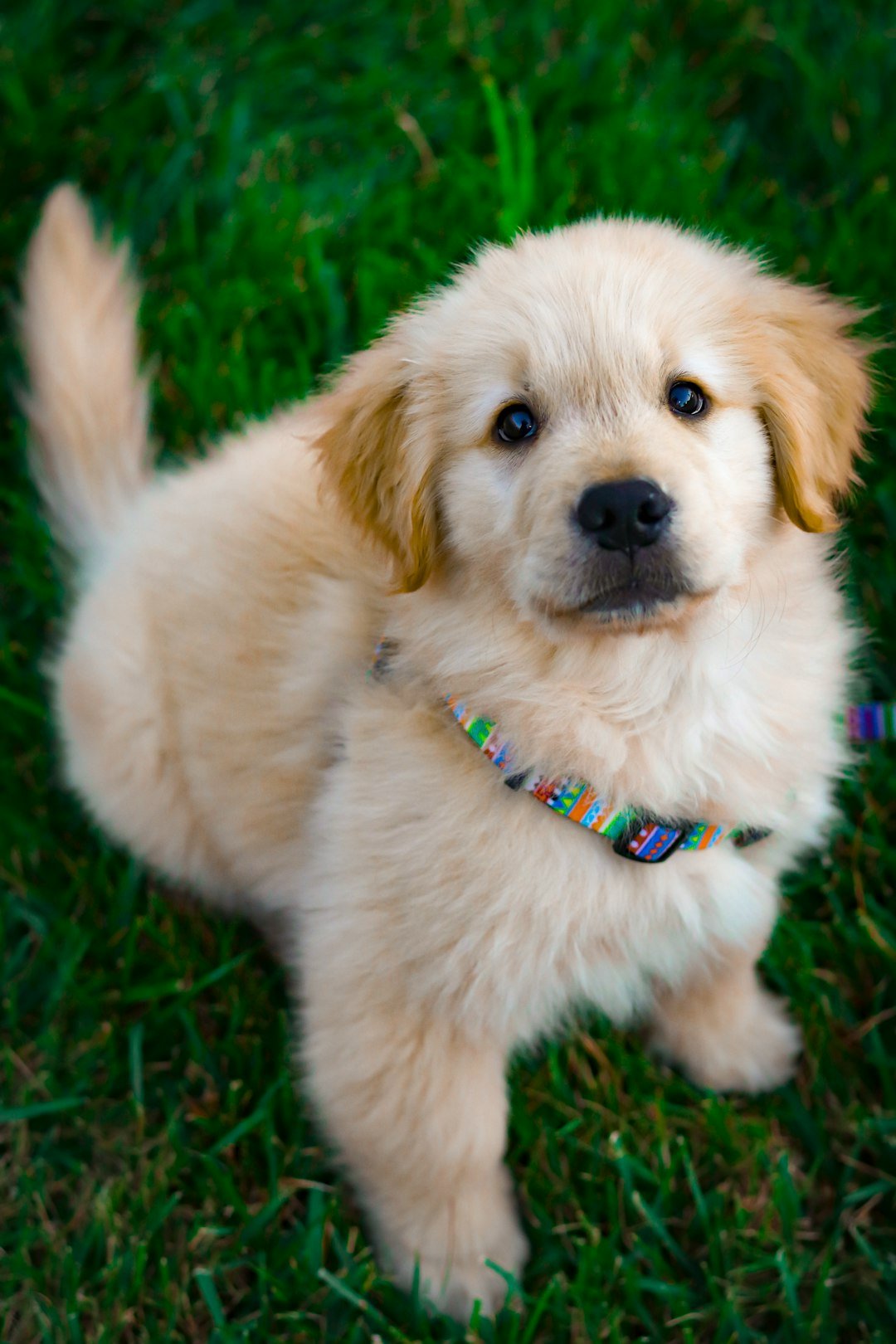
What happens after Golden Retriever puppies are born?
The newborn period is intensive.
Puppies depend heavily on their mother for warmth, nursing and care, while the breeder monitors growth, health and development.
Our guide to newborn Golden Retriever puppies from birth to eight weeks explains how much changes before puppies ever leave for their new homes.
What should puppy buyers ask the breeder?
Ask about health testing, temperament, longevity in the line, previous litters, how the puppies are being raised and how homes are matched.
Do not get distracted by the fact there are eleven adorable puppies in the photo.
Our guide to choosing a Golden Retriever puppy and responsible breeder goes much deeper into what buyers should look for.
Related breeding and puppy guides: Read our guide to choosing a Golden Retriever puppy and responsible breeder, Golden Retriever growth chart, and Golden Retriever health guide.
Useful external reading: The Merck Veterinary Manual guide to canine reproduction explains pregnancy detection and why late-pregnancy radiographs are more useful for estimating litter size than ultrasound alone.
The bottom line
Golden Retriever litter size varies, sometimes considerably.
Age, genetics, reproductive health and individual biology all influence how many puppies a female may have.
The number is interesting.
It is not the measure of a good breeding program.
Healthy parents, careful breeding decisions, excellent maternal care and thoughtful puppy raising matter much more than producing the biggest litter possible.